Africa and AI: Why Policy Must Catch Up with Innovation
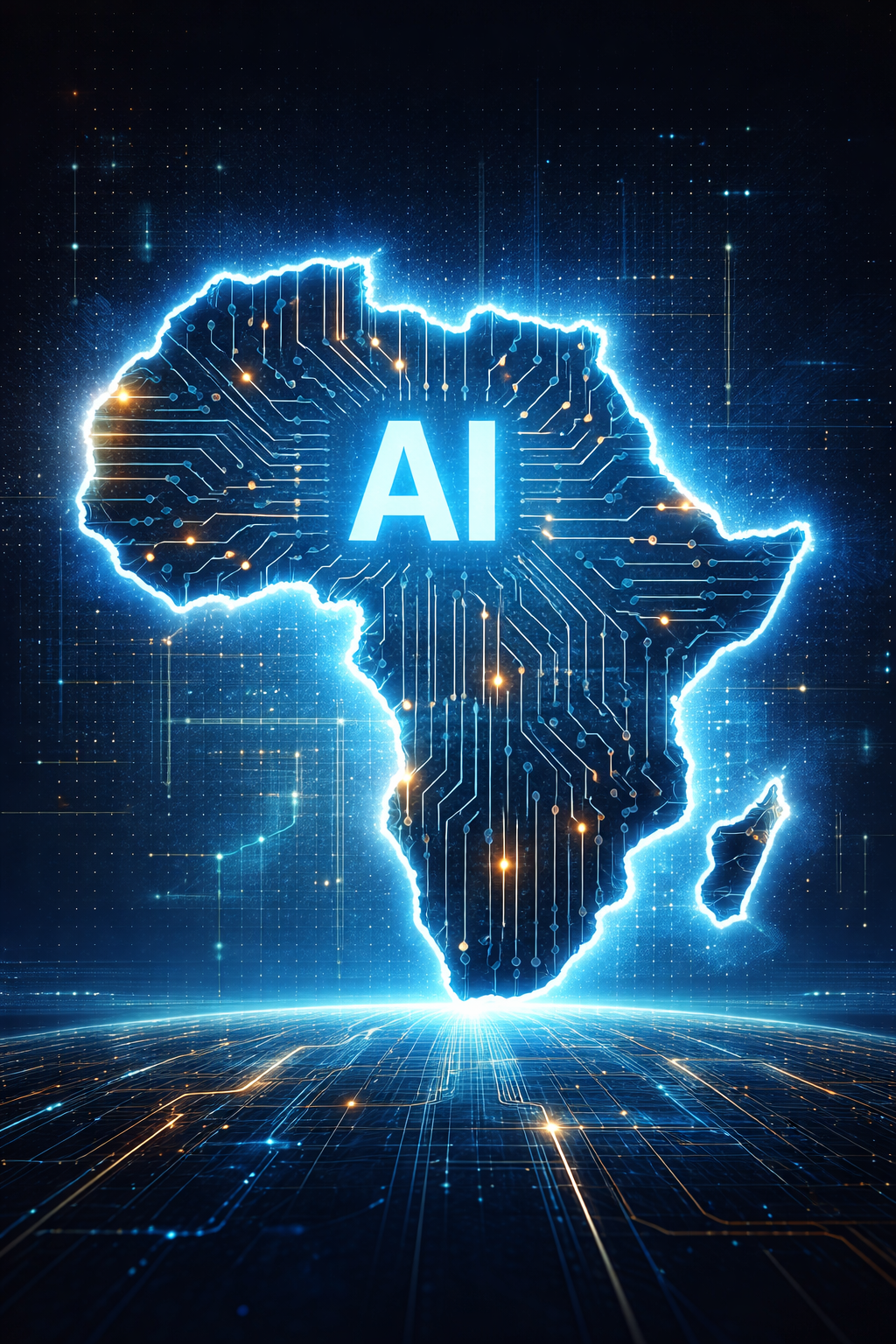
Artificial intelligence is no longer a future concept for Africa; it is a present force shaping governance, markets and social life. From financial services and healthcare to media, security and public administration, AI systems are being adopted at unprecedented speed. Yet as global showcases like the annual Consumer Electronics Show (CES) celebrate the power and promise of intelligent technologies, analysts and policy thinkers are issuing sober warnings: innovation is accelerating faster than the safeguards meant to protect societies.
For African policymakers, this moment demands attention not because AI is inherently dangerous, but because unchecked AI poses real risks to security, social cohesion and democratic trust.
The Security Dilemma: AI as an Asymmetrical Weapon
One of the most pressing concerns raised by cybersecurity analysts is that AI is lowering the cost and skill barrier for sophisticated cybercrime. Generative models can automate phishing, impersonation, fraud and misinformation at a scale previously impossible. International security think tanks warn that AI-driven attacks are becoming harder to detect precisely because they mimic human behaviour so convincingly.
“76% of organisations report increased cyberattacks linked to AI.”— Kaspersky
For African states, many of which are still strengthening digital infrastructure and cybersecurity capacity, this creates a dangerous asymmetry. Attackers can deploy advanced tools globally, while public institutions often lack AI-trained security professionals, robust monitoring systems and legal frameworks for response. The risk is not abstract, as compromised financial platforms, electoral systems, health databases or national registries could undermine both economic stability and public trust.
Global institutions such as the World Economic Forum and the Council on Foreign Relations increasingly frame AI security as a governance issue, rather than a mere technical one. For Africa, where digital transformation is rightly seen as a development accelerator, this warning is especially relevant: digital leapfrogging without security resilience invites systemic vulnerability.
Social Consequences: When Technology Rewrites Human Interaction
An equally consequential concern is AI’s impact on real-life social interaction and human agency. Research bodies, including the Pew Research Centre, report widespread public anxiety that AI could weaken creativity, interpersonal relationships and independent judgment.
In African contexts where community, oral exchange and social networks play a foundational role in civic life, this matters deeply. AI systems designed primarily for engagement can amplify polarisation, misinformation and cultural misrepresentation, particularly where local languages and contexts are underrepresented in training data. Algorithm-driven platforms are already influencing political discourse, media consumption and social norms.
There is also the emerging concern of over-reliance. As AI assistants, automated decision systems and synthetic companions become more common, analysts warn of a gradual erosion of human participation in decision-making, from education and employment to governance itself. For societies still consolidating democratic institutions, delegating too much agency to opaque systems risks weakening accountability.
Governance Is Lagging Behind Reality
Perhaps the most consistent warning from industry think tanks is that AI governance is fragmented and reactive. Regulation differs widely across jurisdictions, enforcement capacity is uneven, and global coordination remains limited. This creates loopholes that powerful actors can exploit, while smaller economies absorb disproportionate risk.
African policymakers are faced with a strategic choice of importing regulatory models wholesale or developing context-aware frameworks that reflect local realities. The absence of clear rules on data protection, algorithmic accountability, public-sector AI use and cross-border digital security will not slow AI adoption, it will simply shift power away from public oversight.
Encouragingly, continental initiatives on data protection and digital trade provide a starting point. But analysts argue that AI demands more; specialised legislation, independent oversight bodies, public-sector AI audits and sustained investment in digital literacy.
A Call for Human-Centred Policy
The central message from analysts is not rejection, but recalibration. AI can enhance productivity, expand access to services and support development goals, but only if embedded within human-centred, security-aware policy frameworks.
For Africa, this means the following:
Treating AI security as a national and regional priority, not a technical afterthought,
Ensuring humans remain accountable for AI-assisted decisions in public institutions,
Protecting social interaction, cultural expression and democratic discourse from algorithmic distortion, and
Building regulatory capacity at the same pace as technological adoption.
The AI era will shape the next phase of global power, productivity and social organisation. Africa’s challenge, and opportunity, is to engage not as a passive consumer of intelligent systems, but as an active shaper of how they are governed and used.
In view of this, the future of AI on the continent should not be defined solely by efficiency or innovation metrics. It must also be judged by a more fundamental measure: does it strengthen security, dignity and human connection, or quietly erode them?
0 Comments
No comments yet. Be the first one to comment!