All You Need to Know About Toyota’s New bZ7 Electric Vehicle
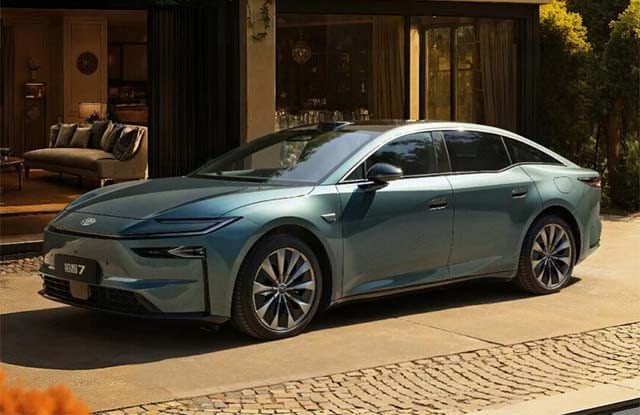
Toyota has launched a new electric vehicle that is already drawing strong global attention.
The Toyota bZ7 received over 3,000 orders within its first hour of release in China.
The rapid demand highlights growing interest in affordable electric vehicles with advanced features.
Here is everything you need to know about the bZ7 and why it matters.
The bZ7 is a new electric vehicle (EV) positioned as a luxury model at a relatively affordable price.
It is available in five variants.
Prices range from about $21,500 to $29,000, making it competitive in the global EV market.
The car is similar in size to high-end models like the Tesla Model S, but comes at a significantly lower price point.
Toyota designed the bZ7 with a strong focus on comfort and advanced technology.
The vehicle includes:
“Zero-gravity” front seats with massage functions
An in-car refrigerator
A smart navigation system powered by Momenta
Advanced sensing technology using LiDAR (light detection and ranging)
Toyota also partnered with major Chinese tech companies like Xiaomi and Huawei to enhance the vehicle’s capabilities.
Experts say this reflects a growing trend where automakers collaborate with tech firms to improve vehicle intelligence and user experience.
The bZ7 offers strong battery performance for its price range.
The base model includes a 71 kWh battery with a range of about 372 miles.
Higher-end versions offer up to 435 miles with an 88 kWh battery.
Fast-charging is another key feature.
The vehicle can gain up to 186 miles of range in just 10 minutes using 3C fast-charging technology.
According to energy analysts, fast charging is becoming a critical factor in EV adoption, as it reduces one of the biggest barriers to electric vehicle use.
The strong early orders reflect a larger shift in consumer behavior.
More drivers are looking for:
affordable EV options
lower fuel and maintenance costs
environmentally friendly transport
Electric vehicles produce no tailpipe emissions.
This contributes to cleaner air, especially in urban areas.
Experts also note that EV ownership costs are generally lower over time.
Drivers spend less on fuel and require less maintenance compared to traditional vehicles.
One of the biggest advantages of EVs is long-term savings.
Charging at home is often cheaper than buying fuel.
Some estimates suggest drivers can save hundreds of dollars annually.
Additional savings are possible when EVs are combined with renewable energy sources like solar power.
Energy experts highlight that generating electricity at home can significantly reduce charging costs and increase energy independence.
Toyota’s bZ7 signals increasing competition in the electric vehicle industry.
China remains one of the most competitive EV markets in the world, with strong local brands like BYD.
To compete, global manufacturers are focusing on:
affordability
advanced technology
longer battery range
Industry analysts believe this competition will benefit consumers by making EVs more accessible worldwide.
Although the bZ7 is currently focused on the Chinese market, its impact could extend globally.
More affordable EVs increase the likelihood of adoption in developing regions, including Africa.
However, experts point out that infrastructure remains a major challenge.
Limited charging stations and inconsistent power supply could slow adoption in countries like Ghana.
Still, falling EV prices may encourage a gradual transition over time.
The Toyota bZ7 represents a shift in the electric vehicle market.
It combines luxury features, strong battery performance, and relatively affordable pricing.
Its early success shows growing demand for practical and cost-effective EVs.
As competition increases, electric vehicles are becoming more accessible.
For consumers, this means more options, lower costs, and a faster transition toward cleaner transportation.
0 Comments
No comments yet. Be the first one to comment!