America Closes Its Doors: A Converging Crisis of War, Policy, and Global Fury
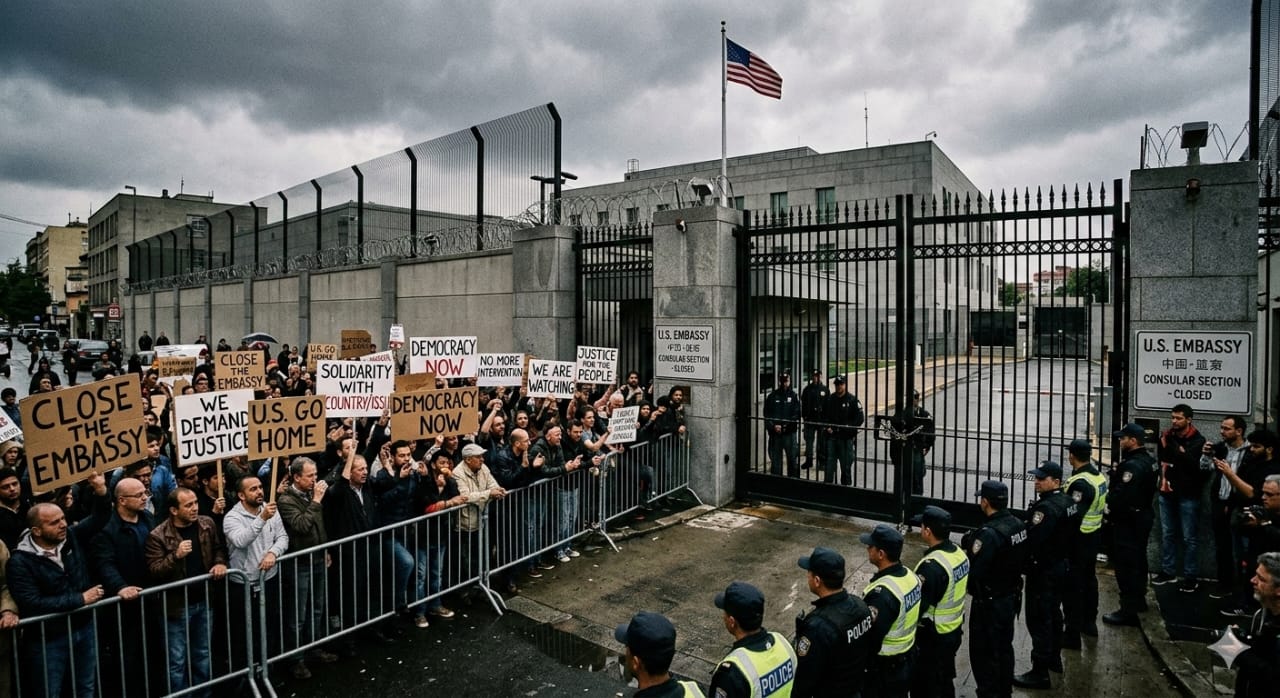
Two storms — one military, one political — have converged on the U.S. consular system with stunning speed, leaving millions of visa applicants in limbo and allies alarmed at what critics are calling the most sweeping retreat from American openness in recent memory.
On February 28, 2026, the U.S. State Department issued a Worldwide Caution alert following the launch of U.S. combat operations in Iran. Within days, American embassies across the Middle East had suspended or drastically curtailed consular operations. In Amman, staff sheltered in place. In Kuwait City, visa services were halted entirely as personnel were ordered to remain home.
"This is not simply an administrative pause — it is the visible fracture of America's global civilian presence under the weight of its own military choices."— Senior Diplomatic Analyst, London School of Economics
But the conflict-driven closures were only part of the story. As early as January 14, the State Department had quietly imposed one of the broadest nationality-based immigrant visa suspensions in recent U.S. history — halting immigrant visa issuances for nationals of 75 countries. The stated rationale: that these nationalities represent a high risk of public benefits usage. The practical consequence: tens of thousands of pending applicants — many of whom had waited years, paid thousands in fees, and attended mandatory interviews — found themselves in a cruel procedural void. The process continued; the visas did not.
The most alarming dimension is not bureaucratic but human and strategic. In Abuja, the U.S. Embassy cancelled all visa appointments on March 4 after intelligence indicated a high probability of protests outside the facility. In Islamabad, consular appointments — including routine citizen services — were suspended following violent anti-American demonstrations at consular facilities in Karachi. America's physical presence abroad was under threat on two fronts simultaneously: from adversarial military forces and from furious citizens of ostensible partner nations.
Legal challenges have moved swiftly. A federal lawsuit filed on February 2 argues that the State Department's mass suspension exceeds its legal authority and directly conflicts with long-established public-charge standards embedded in U.S. immigration law. Legal scholars watching the case say a ruling could reshape the executive's power over visa policy for decades.
The economic undercurrent is equally troubling. The United States was already the sole major economy to record a decline in international visitor spending in 2025. The expanded visa bond program — requiring applicants from 38 nations to post bonds of up to $15,000 — compounds that trend, pricing out middle-income travelers and students who once formed the backbone of American soft power.
Together, the twin suspensions paint a portrait of an American foreign policy apparatus stretched to its limits — fighting a war abroad while pursuing a restrictionist revolution at home, with its embassies caught squarely in the crossfire. Whether Washington can manage both simultaneously without inflicting lasting damage to its global standing remains, for now, an open question with very high stakes.
Reporting compiled from U.S. State Department advisories, federal court filings, and international newswires as of March 5, 2026.
0 Comments
No comments yet. Be the first one to comment!