Argentina and the WHO: A Relationship Undone
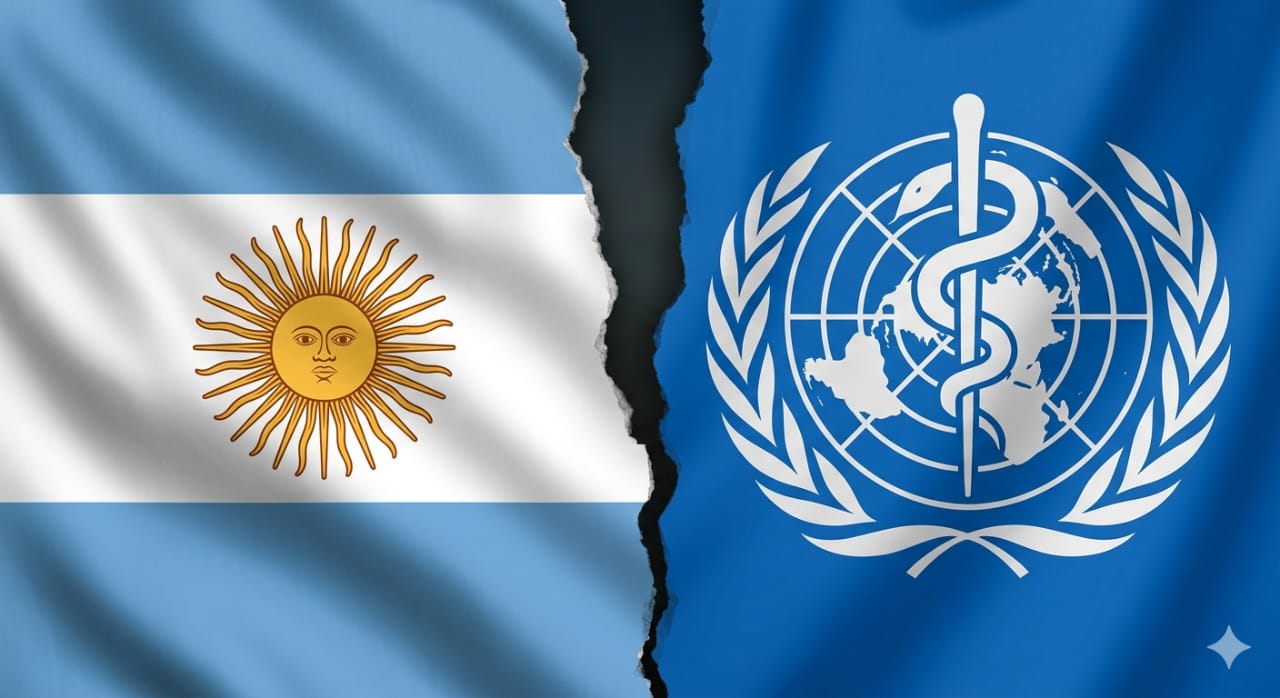
Backgrounder
Argentina was among the original signatories of the WHO Constitution in 1948, establishing itself as a founding member of the United Nations' primary health agency. Over the following seven decades, the country maintained active participation in the organisation's governance structures, contributing to global health norm-setting and benefiting from its technical programmes, procurement frameworks, and disease surveillance networks.
The relationship was largely uncontroversial across successive administrations of varying political orientations. Argentina's contributions to the WHO budget, amounting to approximately $8.75 million across the 2022–2023 biennium and $8.25 million for 2024–2025, were modest relative to major donors, representing roughly 0.11 percent of the total WHO budget. The country did not receive direct WHO financial transfers for health management, though it participated in technical cooperation programmes often channelled through the Pan American Health Organization (PAHO).
Milei's Election and a Shift in Doctrine
The political ground shifted decisively in November 2023 when Javier Milei, an economist and self-described 'anarcho-capitalist', was elected president of Argentina. Milei had campaigned on a radical platform of economic deregulation, aggressive state downsizing, and sharp hostility toward multilateral institutions. His ideological kinship with US President Donald Trump, a fellow sceptic of multilateralism, was established early and has since shaped Argentina's foreign policy posture.
Milei was a vocal critic of the COVID-19 lockdown imposed by his predecessor, Alberto Fernández. He characterised the restrictions as the 'longest lockdown in the history of humanity' and accused international institutions, including the WHO, of having driven them. In his view, the WHO's pandemic recommendations were not grounded in science but in political interests, and the organisation had been complicit in what he termed unprecedented social control.
The Road to Withdrawal: A Step-by-Step Timeline
The breakdown of Argentina's WHO membership did not occur abruptly. It unfolded in identifiable stages across 2024 and 2025.
In 2024, Argentina's government refused to join a new pandemic protocol drawn up by WHO member states, citing concerns that it could compromise national sovereignty over health policy. This was the first formal signal that the Milei administration would not extend passive membership.
On 5 February 2025, just over two weeks after US President Trump signed an executive order on his first day back in office initiating the American withdrawal, presidential spokesperson Manuel Adorni announced that Milei had instructed Foreign Minister Gerardo Werthein to formally begin the Argentine exit process. Adorni said the government would not allow an international organisation to 'intervene in our sovereignty, much less in our health.' That same day, Milei posted on X, calling the WHO's pandemic response 'the largest social control experiment in history.'
On 17 March 2025, Argentina submitted a formal notification of withdrawal to the United Nations Secretary-General, the depositary of the WHO Constitution. Under the Vienna Convention on the Law of Treaties, withdrawal takes effect one year after such notice.
On 17 March 2026, the withdrawal became effective, formally ending Argentina's 78-year membership. Foreign Minister Pablo Quirno confirmed the development publicly, stating that Argentina would continue promoting health cooperation through bilateral agreements and regional frameworks.
"Today, Argentina's withdrawal from the World Health Organization becomes effective, one year after the formal notification issued by our country." — Foreign Minister Pablo Quirno, 17 March 2026
The PAHO Question: A Partial Break
A critical nuance often overlooked in coverage of the withdrawal is Argentina's relationship with PAHO. Unlike the WHO's five other regional offices, PAHO operates as a semi-autonomous body; it functions simultaneously as the WHO's regional arm for the Americas and as the specialised health agency of the Organization of American States. Argentina has confirmed it will remain a member of PAHO.
This distinction carries significant practical consequences. PAHO operates the Regional Revolving Funds, through which countries across the Americas access vaccines, medicines, and medical supplies at substantially reduced cost. In 2024 alone, PAHO purchased 224 million vaccine doses on behalf of member states. Argentina's continued membership in PAHO insulates it, at least partially, from the immediate procurement consequences of the WHO departure.
Nonetheless, departure from the WHO proper means Argentina will no longer have a direct seat in the global body's governance forums, will lose access to WHO technical assistance programmes, and will be excluded from its medicines prequalification system, a framework that ensures quality standards for generic drugs, including HIV and tuberculosis treatments.
The Trump Factor and the Broader Pattern
The timing and framing of Argentina's withdrawal has been consistently linked to the United States' own exit. Trump's January 2025 order was the second such attempt, his first in 2020, was reversed when President Joe Biden rejoined on his first day in office in January 2021. Milei's announcement came sixteen days after Trump's, and observers noted the synchrony was unlikely to be coincidental.
Andrea Oelsner, director of the Political Science and International Relations programme at the University of San Andrés in Buenos Aires, described the move as a return to the 'automatic alignment' with Washington that had characterised Argentine foreign policy in the 1990s. She also rejected the government's sovereignty argument, pointing out that the WHO possesses no legal authority to compel member states to adopt any particular domestic policy.
Israel has been cited as another country facing domestic pressure to withdraw. The precedent set by the US and Argentina is therefore being watched closely by the remaining 192 WHO member states.
What This Means in Practice
The Argentine government has sought to minimise the practical consequences of the withdrawal, arguing that the country did not receive direct WHO funding for health management and that the vaccination schedule remains guaranteed. Deputy Health Minister Cecilia Loccisano stated explicitly that no national health programme would lose operational capacity as a result of the exit.
Independent experts have offered a more cautious assessment. Leandro Cahn, director of the HIV prevention nonprofit Fundación Huésped, warned that outside the WHO framework, Argentina could face higher costs for vaccines and HIV treatments previously obtainable through discounted procurement channels. Some analysts have also highlighted the risk of brain drain in the health sector and reduced access to innovative therapies tied to WHO's medicines prequalification system.
The Buenos Aires Times noted that, in the medium and long term, Argentina gives up its seat in the world's leading multilateral health body at a moment when pandemic preparedness, disease surveillance, and coordinated access to medical technology remain central to global public health management.
0 Comments
No comments yet. Be the first one to comment!