British International Investment Strengthens Ghana Private Sector Ties with High-Level Visit
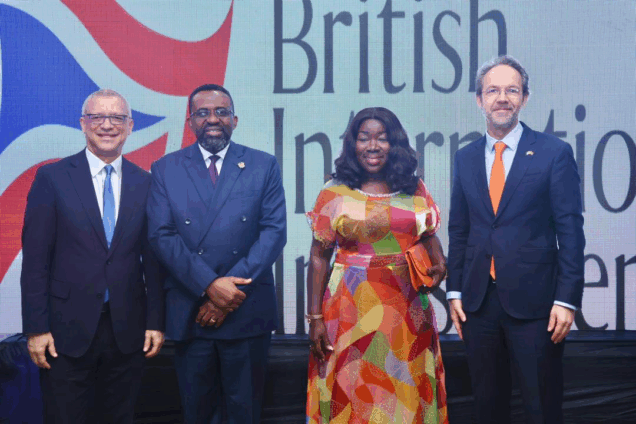
British International Investment (BII), the United Kingdom’s development finance institution and impact investor, has reinforced its long-term commitment to Ghana’s private sector following a high-level leadership visit from 29–30 January 2026. The visit underscored Ghana’s strategic importance within the UK–Ghana economic partnership and highlighted BII’s future investment priorities aimed at driving sustainable and inclusive growth.
The BII Board delegation, led by Chief Executive Officer Leslie Maasdorp, engaged government authorities, investors and private-sector leaders to strengthen collaboration and review progress across businesses supported by BII and Growth Investment Partners (GIP) in Ghana. The discussions focused on deepening partnerships, improving the business environment and mobilising capital to accelerate private-sector development.
A key highlight of the visit was engagement with five investee companies. At Maa Grace Garments International, the Board observed how GIP’s investment has enabled the company to expand into one of Ghana’s largest garment manufacturers. The company produces garments exclusively for export and is expanding its operations to employ an additional 400 local women and men. The expansion reflects how structured private capital can strengthen industrial capacity, boost exports and generate employment.
Beyond company visits, the delegation met pension funds, private equity firms and development finance institutions to explore local capital mobilisation. These conversations are central to Ghana’s long-term economic resilience. While international development finance can catalyse growth, sustainable transformation requires deeper participation from domestic investors and stronger local financial ecosystems.
The visit also featured a high-level networking reception at the British High Commissioner’s Residence. The event convened senior officials, investors and development partners, including the Minister of Trade, Agribusiness and Industry, Elizabeth Ofosu-Adjare, and the Governor of the Bank of Ghana, Dr Johnson Asiama. The presence of both trade and monetary authorities signalled policy alignment and institutional coordination, factors that remain critical to investor confidence.
British High Commissioner Dr Christian Rogg emphasised that inclusive and sustainable growth remains central to the UK’s partnership with Ghana. He noted that the visit strengthens the shared commitment to boosting investment, improving the business climate and advancing a modern, forward-looking bilateral relationship. Leslie Maasdorp described Ghana as a vital partner for British International Investment and reaffirmed BII’s commitment to supporting long-term economic resilience while helping Ghanaian businesses scale and compete globally.
BII’s footprint in Ghana is significant. Its investments currently support more than 15,000 jobs across sectors such as manufacturing, food security, energy, digital connectivity and SME finance. In 2024 alone, BII-backed businesses contributed over US$3 million in taxes to the Ghanaian economy, demonstrating that impact investment can generate measurable fiscal and economic returns alongside social outcomes.
A central pillar of BII’s strategy in Ghana is Growth Investment Partners Ghana, its flagship platform designed to narrow the country’s SME financing gap. By the end of 2025, GIP had invested in 15 small and medium-sized enterprises, supporting over 3,400 jobs. SMEs remain a backbone of Ghana’s economy, yet access to long-term patient capital remains constrained. Addressing this financing gap is essential for sustained private-sector expansion and industrial transformation.
The leadership visit reinforces a broader strategic question for Ghana’s development path. Development finance institutions can catalyse growth, but long-term transformation will depend on regulatory stability, competitive enterprises and stronger local capital participation. With renewed engagement from British International Investment, Ghana’s private sector stands at a point where strategic partnerships could translate into deeper industrialisation, job creation and stronger global competitiveness.
0 Comments
No comments yet. Be the first one to comment!