Burkina Faso’s Export Ban and the Case for Agricultural Domestication in West Africa
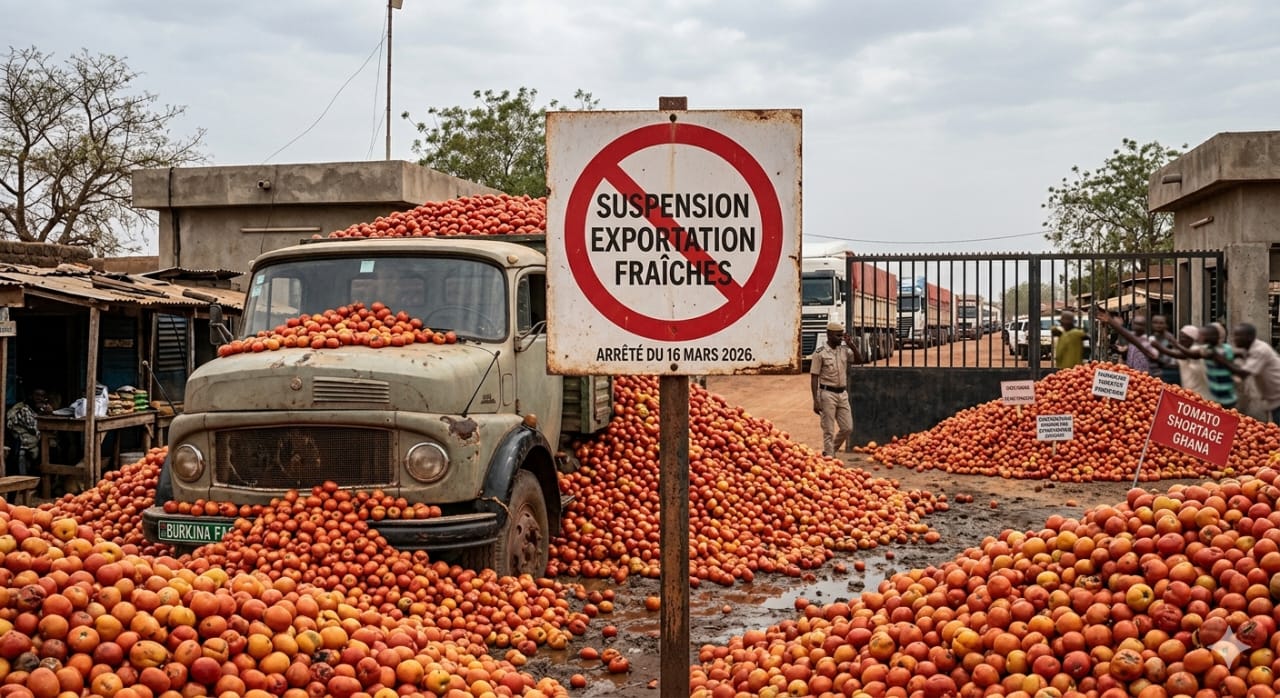
On March 16, 2026, Burkina Faso’s transitional government issued a directive banning all fresh tomato exports with immediate effect, simultaneously suspending Special Export Authorisations (ASE). Any goods seized in violation would be handed, free of charge, to local processing factories. The move is rooted in a deliberate strategy to build domestic agro-industrial capacity, anchored by SOBTO, a processing plant in Dogona with a capacity of six tonnes per hour, opened in November 2024.
The ban is designed to feed that plant, to keep raw agricultural produce within national borders where value can be added, jobs created, and industrial capacity built.
The immediate consequences for Ghana are significant. Data by Graphic Online shows Ghana imports more than $400 million worth of tomatoes from Burkina Faso annually, with roughly 90 per cent of Burkina Faso’s tomato exports destined for the Ghanaian market. The ban has arrived alongside an already volatile trading environment.
In February 2026, seven Ghanaian traders were killed by armed militants in northern Burkina Faso. Market observers are already anticipating price surges for the average Ghanaian consumer.
Ghana’s structural vulnerability in this moment is difficult to overstate. Ghana’s own National Tomato Production Strategy, introduced in February 2026, reveals that locally produced tomatoes account for just seven per cent of what processors use with a target of 85 per cent by 2030. Ghana currently spends over $100 million annually on tomato paste imports alone. Deputy Minister of Agriculture John Dumelo, responding on March 19, said the ministry was still seeking clarity on the ban’s full impact and urged local farmers to intensify dry-season production.
The broader regional implication is reveals that West Africa has long exported raw agricultural commodities while importing processed goods at higher cost , a structural trap that Burkina Faso is now explicitly rejecting. For the sub-region, the ban is a provocation as much as a disruption. If one of the bloc’s most economically constrained nations can move to protect its processing industry, the immediate question is what larger states are waiting for.
Ghana’s response hereon must be structural, not reactive. The National Tomato Production Strategy requires urgent investment in irrigation, cold-chain logistics, and smallholder support to move from policy to programme. The AfCFTA framework, which Ghana hosts, depends on intra-African trade that adds value before crossing borders, and that requires domestic processing capacity that Ghana has so far failed to build at scale. Burkina Faso’s ban is a warning only amplified by a kitchen staple, tomato.
0 Comments
No comments yet. Be the first one to comment!