CPP Urges Bank of Ghana to Protect Pesewa Coins, Warns of 'Silent Devaluation' of the Cedi
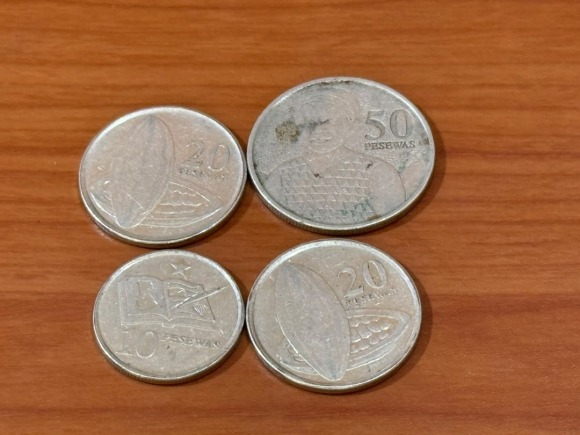
The Convention People's Party (CPP) has called on the Bank of Ghana (BoG) to take decisive action against the growing rejection of pesewa coins across the country, warning that the practice is undermining the value of the cedi and contributing to rising prices.
In a statement signed by the party's Acting National First Vice Chairperson, Joyce Larbie, the CPP urged the central bank to resist any move to phase out small denomination coins and instead enforce their acceptance and circulation throughout the economy.
"The solution is not to abandon small denominations, but to enforce their use and ensure banks accept and recirculate them without penalty," the statement said.
According to the party, the widespread refusal of five, 10, and 20 pesewa coins by traders, transport operators, and members of the public is creating what it describes as a "silent devaluation" of the cedi.
The CPP pointed to everyday examples where the absence of small denomination coins has led to price distortions. Sachet water, which once sold for 20 pesewas, now costs 50 pesewas and in some cases is approaching 70 pesewas. Similarly, transport fares officially fixed at GH¢4.25 are often rounded up to GH¢4.50 because drivers are unwilling or unable to provide pesewa change.
The party argued that such increases are not always driven by production costs or fuel prices but by a market environment that no longer recognizes the role of coins in facilitating accurate pricing.
"This is not driven by production or fuel costs, but by a market that no longer accepts the coins designed for fair pricing. The result is cost push inflation created by our own hands," the statement noted.
The CPP further argued that the situation could undermine the effectiveness of the Bank of Ghana's monetary policy measures. The party referenced the central bank's recent decision to maintain the policy rate at 14 percent and introduce a uniform 20 percent cash reserve ratio effective June 4, 2026, noting that such policies rely on the proper circulation of all legal tender denominations.
Reports from traders in parts of Accra, including Adabraka, Accra Central, Kokomlemle, La Police Road, and Oko-Dan, suggest that many businesses are struggling to recirculate coins collected from customers. Some traders claim that attempts to deposit large quantities of coins at commercial banks have been unsuccessful, making it difficult for them to continue accepting the denominations.
One retailer at Accra Central reportedly attempted to deposit GH¢600 worth of 20 pesewa coins at a bank but was turned away. Similar experiences have been reported by other traders.
Despite these challenges, the legal position remains unchanged. The Bank of Ghana has consistently maintained that all officially issued coins, including the one pesewa, five pesewas, 10 pesewas, and 20 pesewas denominations, remain legal tender and must be accepted for transactions. Under the Currency Act, 1964 (Act 242), individuals and businesses are not permitted to reject valid Ghanaian currency offered as payment.
The CPP is therefore calling for stricter enforcement of existing laws, including sanctions against businesses and individuals who routinely reject pesewa coins. The party also urged commercial banks to accept and recirculate coins without restrictions and encouraged the public to insist on receiving and using small denominations during daily transactions.
Additionally, citizens were advised to report persistent cases of coin rejection through the Bank of Ghana's consumer complaint channels.
The party concluded by stressing that restoring respect for every denomination of the cedi is essential for maintaining economic discipline, supporting fair pricing, and protecting low income earners from unnecessary increases in the cost of living.
“Ghana cannot fight inflation while we discard the foundation of our currency,” the statement said.
0 Comments
No comments yet. Be the first one to comment!