Dollar Dock: Congo To Ban Foreign Currency Business Transactions in April 2027
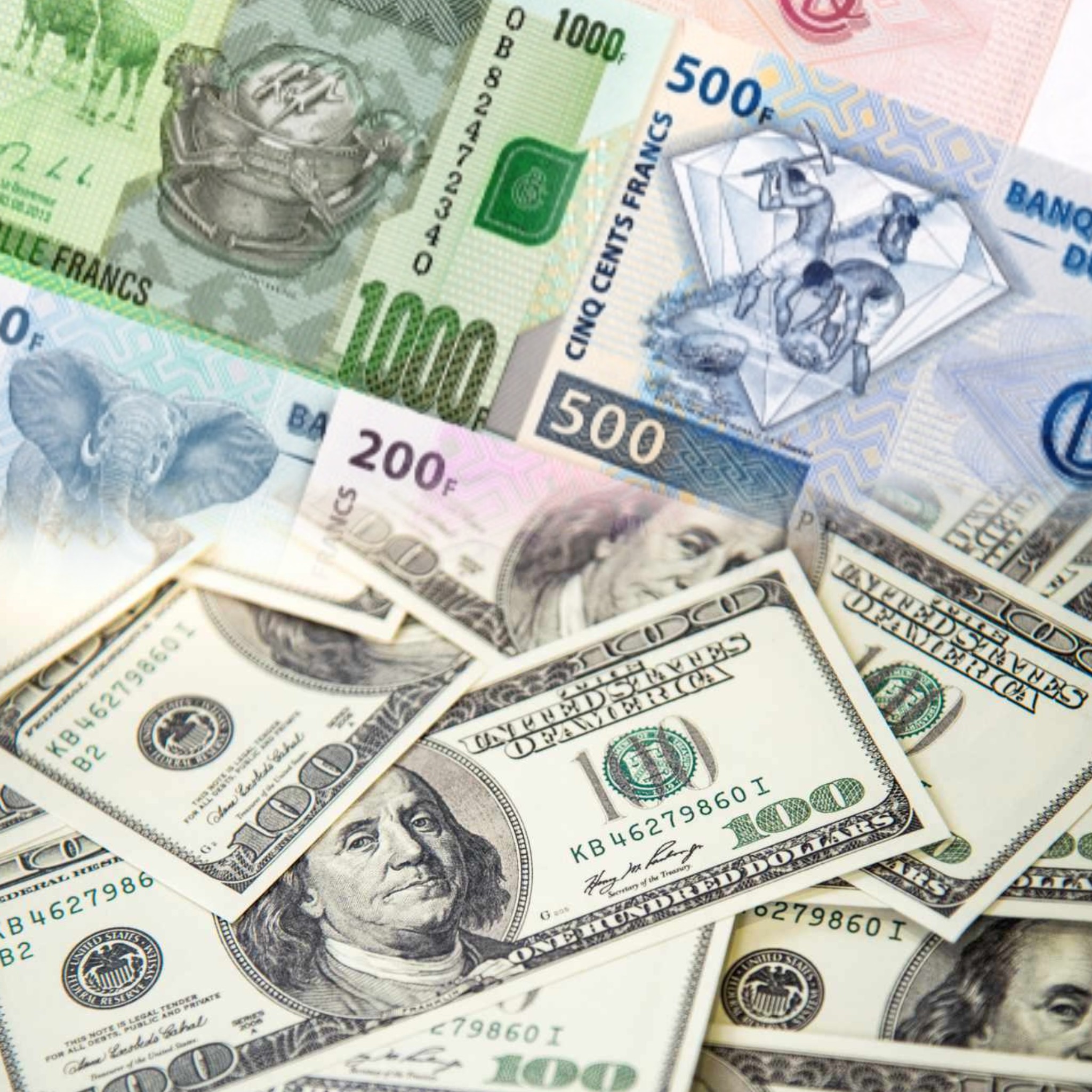
On April 9, the Central Bank of the Congo (BCC) made an announcement that stopped traders across Kinshasa mid-transaction. From the same date in 2027, no individual or business in the Democratic Republic of Congo would be permitted to conduct cash transactions in foreign currencies. The US dollar - long the de facto currency for anyone buying anything above the value of five dollars - was being shown the door.
"From April 9, 2027, no person will be authorised to carry out cash transactions in foreign currencies," BCC Governor André Wameso declared, adding that no commercial bank would be permitted to physically import foreign banknotes. Henceforth, any dealings in foreign currency must flow exclusively through the formal electronic banking system.
The directive was sweeping in scope and blunt in intent. But for the millions of Congolese who have watched similar announcements come and go, the scepticism was immediate and not without historical justification.
A Currency Long Dethroned
To understand why the BCC is taking this step, one must travel back to the 1990s, when the Congolese franc effectively ceased to function as a reliable store of value. Inflation surged to an annual rate of around 2,000 percent; a figure that would terrify any household or business owner. In desperation, ordinary Congolese turned to the dollar, which offered stability that the franc simply could not.
Three decades on, that emergency substitution has become structural reality. Today, the Congo franc trades at roughly 2,300 to the dollar, a sharp decline from about 920 to the dollar in 2010. Most transactions above five dollars are conducted in greenbacks. The dollar is not merely preferred; for many Congolese, it is the only practical option.
This phenomenon, known as dollarisation, is common across economies that have experienced severe monetary crises. But in the DRC, it has proved particularly stubborn. Authorities have launched multiple initiatives to reassert the franc's relevance, including a 2024 directive requiring banks and financial institutions to configure payment terminals to accept only the local currency. Each time, the market has absorbed the intervention and continued largely as before.
The Compliance and Crime Dimension
This time, the BCC is framing its intervention not merely as a currency sovereignty question, but as a financial crime and national security imperative; a framing that adds a layer of international urgency to the domestic policy challenge.
The DRC currently sits on the Financial Action Task Force (FATF) grey list, a designation that signals to the global financial community that the country's frameworks for combating money laundering and terrorist financing have identified gaps. Being grey-listed carries real economic costs: it complicates correspondent banking relationships, raises the cost of international transactions, and can deter foreign investment.
By channelling all foreign currency transactions through formal banking infrastructure, the BCC argues it will bring greater transparency to financial flows, making suspicious activity easier to detect and report. A central role in monitoring has been assigned to the National Financial Intelligence Unit, CENAREF, which will analyse transactions flagged by the new system.
"The measure aimed to continue the fight against the risk of money laundering and terrorist financing," the central bank said in its statement. The BCC has also taken exclusive control of foreign banknote imports from April 9, 2027, removing commercial banks from that supply chain entirely. The move is designed, it says, to strengthen the security of foreign currency supply and standardise exchange procedures nationwide.
The FATF context matters beyond optics. If Kinshasa can demonstrate that the new framework is producing measurable improvements in transaction oversight, it may bolster the country's case for removal from the grey list, a prize with concrete economic value.
A Continental Moment
The DRC's announcement does not exist in isolation. Across the continent, there is a discernible trend of central banks reasserting control over domestic monetary ecosystems that have been partially colonised by foreign currencies, most commonly the dollar.
Tanzania made headlines recently with its own directive outlawing the use of foreign currencies for domestic payments. The policy drew both applause from monetary sovereignty advocates and scepticism from traders accustomed to dollar-denominated commerce. The DRC's move now puts two major African economies on a broadly parallel track, raising questions about whether a wider continental pattern is emerging.
The background is significant. African central banks are operating in a moment of heightened awareness around currency vulnerability. The strength of the dollar in recent years has imposed imported inflation on economies whose imports are dollar-denominated but whose workers earn in local currency. De-dollarisation, where feasible, represents a form of monetary insulation, even if it is rarely easy to achieve in practice.
The African Continental Free Trade Area (AfCFTA) framework, with its ambitions of intra-African trade settlement in local currencies, provides an additional long-term structural argument for reducing dependence on the dollar. Whether the DRC's move fits within a coherent continental strategy or is primarily a domestic response to accumulated frustration is a question analysts will debate.
The Enforcement Problem
Announced policy and implemented reality are two different things in the DRC, and observers are quick to note the gap. The country has a large, deeply entrenched informal economy, one in which cash-based dollar transactions are not merely a convenience but often the only form of commerce available to people without bank accounts or reliable access to electronic payment infrastructure.
Enforcement of a cash ban is an inherently difficult proposition in any economy. In one where banking penetration is limited and rural communities may have no realistic alternative to cash, it borders on the logistically formidable. Analysts have warned that without a credible enforcement mechanism and, critically, a genuine expansion of accessible banking infrastructure, the directive risks becoming another aspirational statement that the market quietly ignores.
There is also the matter of public trust. The franc's weakness is not just a technical monetary phenomenon; it is the lived experience of Congolese citizens who watched their savings erode in the 1990s and have not forgotten the lesson. Rebuilding confidence in the local currency requires more than a ban on alternatives; it requires demonstrated monetary discipline, political stability, and a track record of inflation control that the BCC can now, to its credit, begin to point to.
A More Stable Platform
To that last point, the macroeconomic backdrop against which the BCC is launching this initiative is more favourable than at any point in recent memory. The Congolese economy is showing genuine signs of stabilisation. Inflation, which stood at 10.1 percent year-on-year at the end of March 2025, had eased dramatically to 2.2 percent by the same point in 2026. Economic growth is projected to reach 6.2 percent in 2026, up from 5.8 percent the previous year, driven by the extractive sector - cobalt, in particular - and solid non-mining activity.
In a separate monetary policy decision announced alongside the currency directive, the BCC cut its key interest rate by 150 basis points, bringing it from 15 percent down to 13.5 percent; a signal that the bank believes inflationary pressures are sufficiently contained to permit easing. It is a relatively comfortable position from which to attempt structural currency reform.
Still, gaps persist. The spread between the official exchange rate, around 2,287 Congolese francs to the dollar, and the parallel market rate of approximately 2,309 reflects residual distrust and arbitrage pressure. Closing that gap is both a precondition for and a measure of the policy's eventual success.
One Year to Make It Work
The BCC has given itself, and the country, twelve months to prepare. That window is intentional: businesses and individuals need time to adapt, banks need time to build out electronic payment infrastructure, and regulators need time to put monitoring frameworks in place. Whether twelve months is enough is another matter.
However, a failed attempt risks reinforcing the perception that the BCC lacks the institutional muscle to back its own directives. This means, a credibility problem that would make future monetary interventions even harder to implement. A successful one, however partial, would represent a meaningful step toward currency sovereignty and could help the country's case with FATF.
For now, the world's most mineral-rich country is betting that this time, the announcement will not simply dissolve into the market's long memory of disappointed expectations. Governor Wameso has specified April 9, 2027 as the day of execution.
0 Comments
No comments yet. Be the first one to comment!