ECG: How Ghana Could Survive an 80% Energy Budget Cut
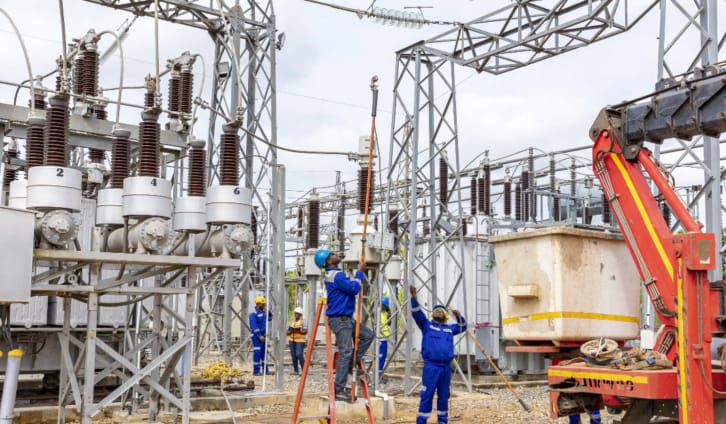
In Ghana, power outages are routine enough that families and businesses plan around them. But behind the daily inconvenience lies a system that struggles to collect revenue, extend service, and finance expansion. At the same time, real progress is being made in decentralized renewable power. This is progress rooted in tangible projects and measurable outcomes.
One of the most credible examples is the Scaling‑Up Renewable Energy Programme (SREP). Launched by the Government of Ghana with support from the African Development Bank, the Climate Investment Fund and others, SREP aims to bring reliable, clean power to the country’s most remote communities. The initiative involves 35 solar mini‑grids and 1,450 solar home systems across off‑grid regions, particularly in the Bono East, Oti, and Savannah regions, as well as 12,000 net‑metered rooftop systems nationwide. These installations are designed to provide electricity where extending the central grid is prohibitively expensive or technically infeasible, benefiting tens of thousands of people.
The SREP project specifically targets island and lakeside communities, connecting them to renewable power that was previously out of reach. In one documented case within the broader Volta Lake region, mini‑grid systems have delivered up to 456 MWh of renewable generation annually, serving local residential and economic activity that would otherwise go without reliable electricity.
These community‑scaled systems are significant because they bypass some of the persistent challenges facing the centralized grid. The Electricity Company of Ghana (ECG) continues to struggle with high technical and commercial losses, reporting around 30% in 2024, which drains revenue and weakens the utility’s ability to maintain infrastructure and expand service.
Another high‑impact renewable project is the Bui Hydro–Solar Hybrid facility. By integrating floating and ground‑mounted solar with an existing hydroelectric station, Ghana has created one of West Africa’s pioneering hybrid renewable installations, adding scalable solar generation while smoothing demand on hydro resources.
These examples show that decentralized and hybrid energy systems are already contributing real value, not as abstract ideals, but as working components of Ghana’s energy landscape. When budgets tighten, focusing on such systems with clearly defined financing partners, measurable outputs, and locally relevant deployment strategies, will provide a more resilient pathway than relying solely on large centralized infrastructure that the country struggles to fund and maintain.
Ultimately, the conversation should shift from what’s politically comfortable to what’s operationally verifiable: scalable renewable assets, pragmatic loss reduction, and energy solutions that work within the country’s fiscal realities.
0 Comments
No comments yet. Be the first one to comment!