Finance Minister Credits Spending Cuts for Helping BoG Bring Inflation Under Control
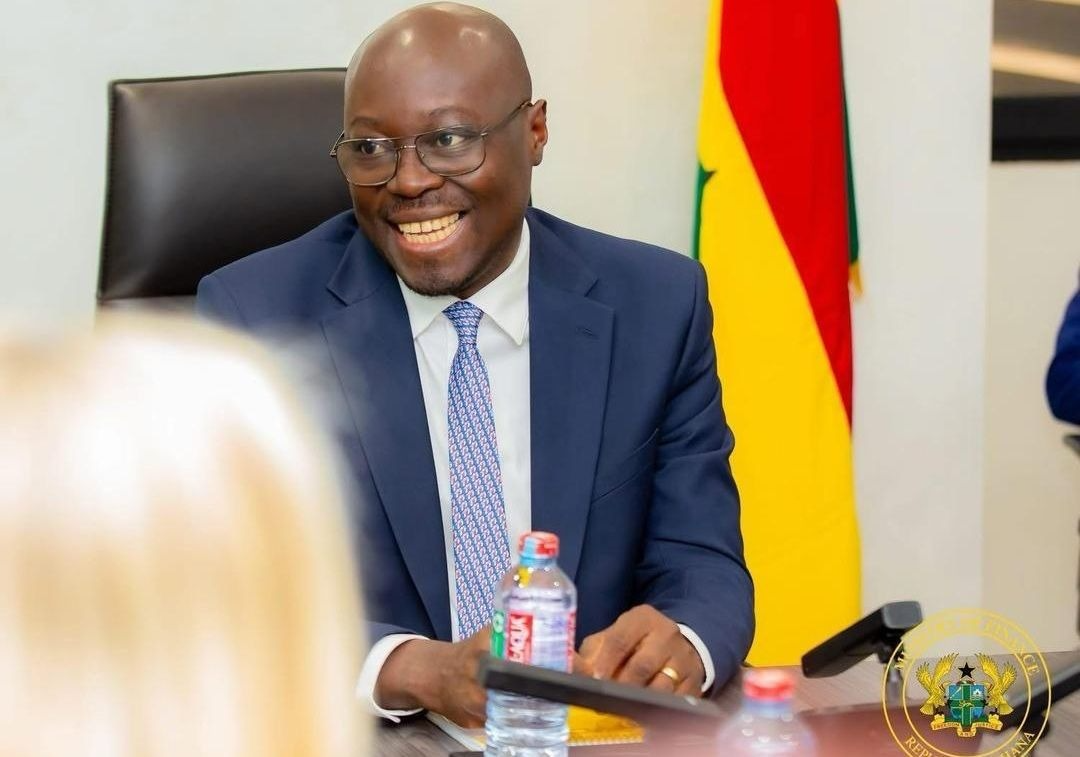
Finance Minister, Dr. Cassiel Ato Forson has attributed Ghana's sharp decline in inflation to the government's commitment to fiscal discipline, arguing that reduced public spending created the conditions necessary for the Bank of Ghana to stabilize prices and lower interest rates.
Speaking to journalists, Dr. Forson said fiscal and monetary policies work hand in hand, and that the government's efforts to control expenditure significantly supported the central bank's inflation fighting measures.
“By cutting expenditure, we have assisted the Bank of Ghana to tame inflation,” he stated.
According to the Finance Minister, the results of this coordinated approach are evident in the country's recent macroeconomic performance. Inflation, which stood at 23.8 percent in December 2024, fell to 3.4 percent by April 2026, marking one of the most significant declines in recent years.
Treasury bill rates also recorded substantial reductions during the period. The 91 day Treasury bill rate declined from 28.4 percent to 4.8 percent by April 2026, while the Bank of Ghana's Monetary Policy Rate was reduced by 1,300 basis points, falling from 27 percent in January 2025 to 14 percent. These developments have helped ease borrowing costs for both businesses and government.
Dr. Forson explained that the government's fiscal consolidation strategy included tighter expenditure controls, amendments to the Public Financial Management Act, the establishment of the Gold Board, the removal of taxes such as the E Levy and Betting Tax, and the creation of institutions aimed at improving public financial management and spending efficiency.
The Finance Minister noted that these measures contributed to a primary surplus of 2.5 percent, exceeding the government's target of 1.5 percent. He described the outcome as the result of a deliberate policy framework designed to complement the Bank of Ghana's monetary tightening efforts.
According to him, the Ministry of Finance and the central bank worked in a coordinated manner, with fiscal restraint helping to create the stability needed for inflation expectations to decline.
Ghana's broader economic indicators also showed improvement during the period. The economy recorded real GDP growth of 6.0 percent in 2025, while the debt to GDP ratio declined from 61.8 percent in 2024 to 44.7 percent in 2025.
In addition, the country posted a current account surplus of 8.3 percent of GDP in 2025, reversing years of persistent current account deficits and strengthening Ghana's external position.
Dr. Forson said the results demonstrate the effectiveness of combining fiscal prudence with monetary discipline, adding that the strategy has helped restore investor confidence and stabilize the cedi after years of volatility.
“Our results affirm that fiscal prudence and discipline always deliver results,” he said.
The Finance Minister's remarks come as Ghana concludes its US$3 billion Extended Credit Facility programme with the International Monetary Fund. With the programme now completed, attention is shifting to the country's ability to sustain recent economic gains independently.
However, analysts continue to monitor potential risks to the outlook, particularly rising global energy prices linked to tensions in the Middle East, which could place renewed pressure on inflation and economic stability in the months ahead.
0 Comments
No comments yet. Be the first one to comment!