Ghana @ 69: The Nation Striving to Become Itself
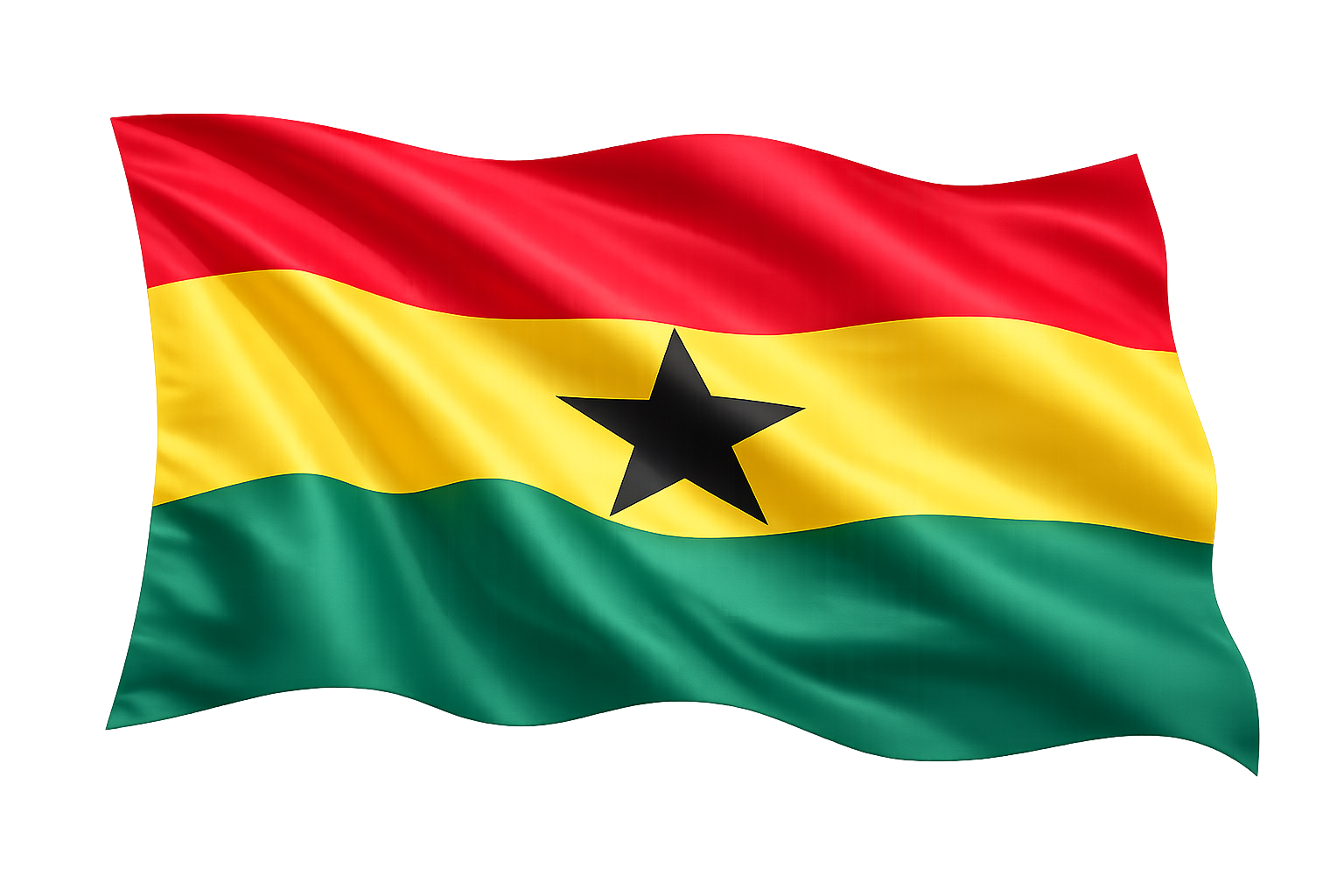
At 69 years of independence, Ghana has accumulated sovereignty without building the structures, policies, and cultural architecture that would make it, unmistakably, irreducibly, itself. This editorial offers an analytical reckoning, not a ceremonial one.
I. What We Mean by National Identity
Before an argument about the failure of national identity can be made, the concept must be defined, because it is one of the most
contested terms in the social sciences, and polemicists of all stripes abuse it freely. This editorial uses it in the structural, non-ethnic sense developed most rigorously by sociologist Liah Greenfeld: national identity as a form of
collective self-understanding, institutionally expressed, that gives a polity a sense of distinctiveness, continuity, and shared purpose. It is not blood, not tribe, and not the performance of culture on state occasions. It is
architecture, the sum of deliberate choices made in educational curricula, governance design, economic policy, and foreign relations that, taken together, tell a people what they stand for, what they will protect, and where they are going.
By this measure, distinct national identities are not natural outcomes of independence. They are constructed, often slowly, always
deliberately, through what political scientist Peter Evans calls the "embedded autonomy" of a developmental state: institutions capable of
pursuing a long-term national project independent of short-term politicalpressures. Singapore built one. South Korea built one under Park Chung-hee, albeit under authoritarian conditions Ghana should not emulate. Botswana and Mauritius, postcolonial, democratic, resource-dependent, and demographically comparable, built versions of one under far more instructive conditions. Ghana has not.
That is the argument. It is not that Ghana has done nothing. It is that what Ghana has done has been episodic, under-institutionalised, and insufficiently anchored in a coherent conception
of what a Ghanaian national identity demands from the state.
National identity is not sentiment. It is architecture, built through deliberate choices in education, governance, economics, and
foreign policy.
II. What Ghana Has Done, and Why It Is Not Enough
A hostile reading of this argument might point to Ghana's genuine achievements in identity-building, and it would not be wrong to do so.
The Year of Return in 2019, and its successor Beyond the Return, were not merely tourism campaigns, they were deliberate acts of diaspora statecraft that reconnected the Ghanaian state to its global community in ways that generated real economic and symbolic capital. PANAFEST has, since 1992, attempted to anchor Ghana's identity in the wider African diaspora experience.
The revival of history as a compulsory subject in basic schools, reversed after decades of absence, reflects a growing institutional recognition that national memory is a policy matter, not a cultural luxury. Afrobeats, Ghanaian film, and the global reach of Ghanaian fashion designers have created soft
power assets that the state did not manufacture but has increasingly sought to
amplify.
These are real. They should be acknowledged, not minimised. But acknowledge them honestly and a more troubling picture emerges: they are moments, not a movement. They are episodes without architecture. The Year of Return produced no permanent institutional structure for diaspora engagement. PANAFEST has been chronically under-resourced. The history
curriculum, reintroduced, remains contested in content and under-supported in pedagogy. Afrobeats is not a policy, it is a cultural phenomenon that the state has been largely passive in the face of, neither obstructing it nor building the intellectual property infrastructure, the music industry frameworks, or the export financing mechanisms that would allow it to generate durable national economic value.
The pattern is consistent across domains: Ghana recognises what identity-building requires, generates promising initiatives,
and then fails to institutionalise them. Recognition without institutionalisation is not policy. It is aspiration. And at 69, aspiration is
no longer an acceptable substitute for structure.
Ghana's identity investments have been real but episodic, moments without architecture, initiatives without institutions.
III. Education: The Curriculum That Does Not Know Itself
The educational system is the state's most direct instrument for national identity formation, which is why its condition in Ghana is so consequential. What a country teaches its children is a statement of civilisational priority. For most of Ghana's post-independence history, that statement has been ambivalent at best.
The removal of history as a compulsory subject from the basic school curriculum, sustained for years before its partial reinstatement, was not a neutral administrative decision. It was a choice to deprioritise national memory at the precise developmental stage when civic identity is most powerfully formed. Its consequences are visible in the generational gap between Ghanaians who can articulate the intellectual traditions of Nkrumah's African
Socialism, Danquah's liberal constitutionalism, or the philosophical frameworks of the stool-land system, and those for whom these are distant abstractions. A nation that does not teach its children its own intellectual history should not be surprised when they reach for someone else's.
The deeper problem is structural rather than curricular. Even where Ghanaian content has been taught, it has often been taught within a
pedagogical framework inherited from colonial education, one that valorises rote transmission over critical civic inquiry, that separates knowledge from context, and that measures success through examinations designed to produce globally mobile workers rather than nationally embedded citizens. The Ghana Education Service has acknowledged many of these problems. Acknowledgment,
again, has not been followed by the kind of sustained, resourced reform that would change the underlying logic of the system.
The Mauritius comparison is instructive and
under-discussed. A small island nation with no natural resources and a more complex colonial inheritance than Ghana's, Mauritius made a deliberate state investment in education as both economic strategy and identity architecture from the 1970s onward. The result, a population with higher educational
attainment, stronger civic institutions, and a per capita income more than double Ghana's, is not unconnected to that investment. The lesson is not simply that education spending matters. It is that education with a clear conception of national purpose produces different outcomes than education that is merely functional.
IV. Governance: Procedural Democracy Without Developmental Purpose
Ghana's democratic credentials are, by regional
standards, genuinely admirable. Seven consecutive peaceful transfers of power, a judiciary that has demonstrated meaningful independence, including in the landmark 2013 Supreme Court election petition ruling, and a civil society that is active, vocal, and consequential. The 2024 Ibrahim Index of African Governance placed Ghana among the continent's top performers on safety, rule of
law, and participation. This is real, and it should be said plainly.
But the Ibrahim Index also reveals a more troubling story. Ghana's scores on sustainable economic opportunity, which captures
human development, infrastructure, and economic management, have stagnated
relative to its governance process scores. The gap between procedural democratic quality and developmental outcome is precisely the gap that the concept of the developmental state was designed to explain. Ghana has built the
democracy. It has not built the developmental capacity.
The Afrobarometer surveys offer a complementary diagnosis. Consistently, Ghanaian respondents report higher trust in
traditional institutions, chieftaincy, religious leadership, community structures, than in formal state institutions, including the civil service, parliament, and local government. This is not an argument for replacing formal
institutions with traditional ones. It is evidence that formal institutions have not yet achieved the cultural legitimacy necessary to anchor a coherent national identity. When citizens route their civic lives around the state rather than through it, the state is not performing its identity-forming function.
The structural explanation is not hard to find. Ghana's civil service has been progressively politicised through successive administrations, a pattern documented in detail by the Institute for Democratic Governance and the Centre for Democratic Development. Political
appointments penetrate deep into technical and administrative roles, stripping the civil service of the institutional memory and professional autonomy that would allow it to pursue long-term national projects across electoral cycles. This is the central incapacity of the Ghanaian state: it can manage elections, but it cannot manage transformation.
Ghana has built the democracy. It has not built the
developmental capacity, and the distance between those two achievements is the
measure of the identity deficit.
V. Economic Sovereignty: The Structural Case and Its Limits
The structural constraints on Ghana's economic
development are real and should be stated honestly before the political critique is made. Commodity price volatility, cocoa and gold account for the majority of Ghana's merchandise export earnings, creates fiscal instability that no government, however competent, can fully insulate itself from. The
infrastructure deficit inherited at independence, compounded by debt-financed development that has periodically generated unsustainable external obligations, represents a genuine constraint on policy space. The 2022-23 debt
restructuring, which led to the IMF programme now in operation, was partly the consequence of these structural vulnerabilities.
But structural constraint is not structural determinism. Botswana inherited a diamond-dependent economy at independence in 1966, with worse infrastructure, lower educational attainment, and smaller state capacity than Ghana. Through the Debswana joint-venture structure, it retained a 50 percent equity stake in its primary extractive industry, reinvested resource rents through the Pula Fund, and built domestic institutional capacity over decades. The result is an economy that, while still commodity-dependent, has built fiscal buffers, maintained low debt, and produced far stronger human development outcomes than Ghana's comparable resource profile would predict.
The difference is not geography. It is policy sustained over time by institutions with a clear conception of national economic purpose.
Ghana has attempted industrial policy, the One District, One Factory initiative, the Ghana Beyond Aid agenda, the earlier attempts at
cocoa processing expansion. None has been sustained long enough to change the underlying architecture of the economy. The failure is political rather than technical: each policy is abandoned or diluted when the administration that originated it loses office, because no policy is embedded in institutions
capable of surviving partisan change. This is the material consequence of the governance deficit described above. An economy cannot build a sovereign identity if the institutions responsible for building it cannot outlast an
election cycle.
Transparency International's Corruption Perceptions Index consistently places Ghana in the middle range globally, an improvement on the regional average, but reflective of the institutional fragility that allows rent-seeking to deflect industrial policy from its stated purposes. The World Bank's 2023 Ghana Public Expenditure Review documented systematic gaps between budgeted and actual capital expenditure in productive sectors, attributable in part to discretionary reallocation of funds within the executive. These are not rhetorical accusations. They are documented patterns that explain why industrial policy, even when competently designed, fails to compound into
structural transformation.
VI. Foreign Policy: The Pan-African Alibi
Ghana's contributions to African and global governance have been genuine and should not be undervalued. The hosting of the African
Continental Free Trade Area secretariat in Accra was a significant diplomatic achievement, one that reflects Ghana's accumulated credibility as a stable, outward-looking state. Ghanaian peacekeeping contributions, consistently among the highest per capita on the continent, represent a foreign policy asset that has generated real diplomatic goodwill and institutional relationships with global security architecture.
The problem is not that Ghana has invested in pan-African and global engagement. The problem is that this engagement has not been
systematically leveraged in the service of clearly articulated national interests. Consider the AfCFTA hosting: Ghana secured the secretariat but has been slow to build the domestic trade facilitation infrastructure, standards harmonisation capacity, and export promotion architecture that would allow
Ghanaian firms to be among the primary beneficiaries of the framework it hosts.
The diplomatic win was not converted into an economic strategy. This is the pattern, Ghana earns symbolic capital and fails to convert it into material gain because the foreign policy apparatus lacks a clear theory of what Ghana
needs from the world.
The negotiating history of Ghana's bilateral investment treaties, documented in the UNCTAD Investment Policy Hub, reveals a pattern of agreements weighted toward investor protection over host-country policy space: terms that constrain Ghana's ability to impose local content requirements, preference domestic processing, or regulate capital flows in ways that would support industrial policy. These were not inevitable terms. They were negotiated terms, in the context of a foreign policy that was more anxious to signal openness than to protect sovereign economic space.
The conflation of Ghanaian identity with pan-African identity is emotionally resonant and historically grounded. But it has also, in practical terms, served as a substitute for the harder work of articulating what Ghana specifically needs from its international relationships, and what Ghana specifically is prepared to defend. Pan-Africanism is a value. It is not a foreign policy.
Ghana earns symbolic capital on the world stage and consistently fails to convert it into material national gain — because we have values without a strategy.
VII. What Sixty-Nine Years Demands
The argument of this editorial is structural, not moral. It does not say that Ghanaians have been lazy or their leaders uniquely venal.
It says that the institutions, policies, and deliberate choices necessary to produce a coherent national identity have not been sustained. That distinction matters, because moral arguments produce guilt and defensiveness. Structural arguments produce, at their best, the clear-eyed identification of what must change.
What must change is the logic of governance, from the management of electoral cycles to the management of national projects that outlast them. What must change is the educational curriculum, from the production of globally mobile labour to the formation of nationally embedded citizens who also happen to be globally competitive. What must change is the
economic policy framework, from the optimisation of short-term fiscal stability to the deliberate, patient construction of productive capacity and sovereign economic institutions. What must change is the foreign policy doctrine, from the performance of regional leadership to the strategic pursuit of national interest within a framework of African solidarity
None of this is impossible. It is not even unprecedented, Botswana, Mauritius, and yes, the flawed but instructive cases of Singapore and South Korea demonstrate that small, postcolonial states with limited resources can build coherent national identities through institutional investment and political will. The question is not whether Ghana can. It is whether Ghana will, whether, at 69, the country is ready to stop celebrating its independence and start taking it seriously.
An honest anniversary is not a comfortable one. But it is the only kind worth having.
0 Comments
No comments yet. Be the first one to comment!