Ghana-Burkina Faso Pact: What Triggers Account For This Bilateral Partnership

The immediate catalyst for renewed cooperation between Ghana and Burkina Faso has been rising insecurity in the Sahel, particularly violent extremist attacks that have affected both countries and disrupted key trade routes. A terrorist attack in Titao, northern Burkina Faso, in February 2026, in which several civilians, including Ghanaian traders, were killed, underscored the vulnerability of cross-border movement and commerce and accelerated talks between Accra and Ouagadougou.
Beyond security, recurring humanitarian and border challenges, such as devastating flooding from the Bagré Dam that affects northern Ghana and Burkina Faso’s shared frontier, have added urgency to formalising stronger cooperation mechanisms.
What Deals Were Signed
Following the conclusion of a session of the Permanent Joint Commission for Cooperation (PJCC) in Ouagadougou —a bilateral mechanism that had been dormant for six years, the two countries signed seven major bilateral agreements spanning security, trade, border governance and disaster response.
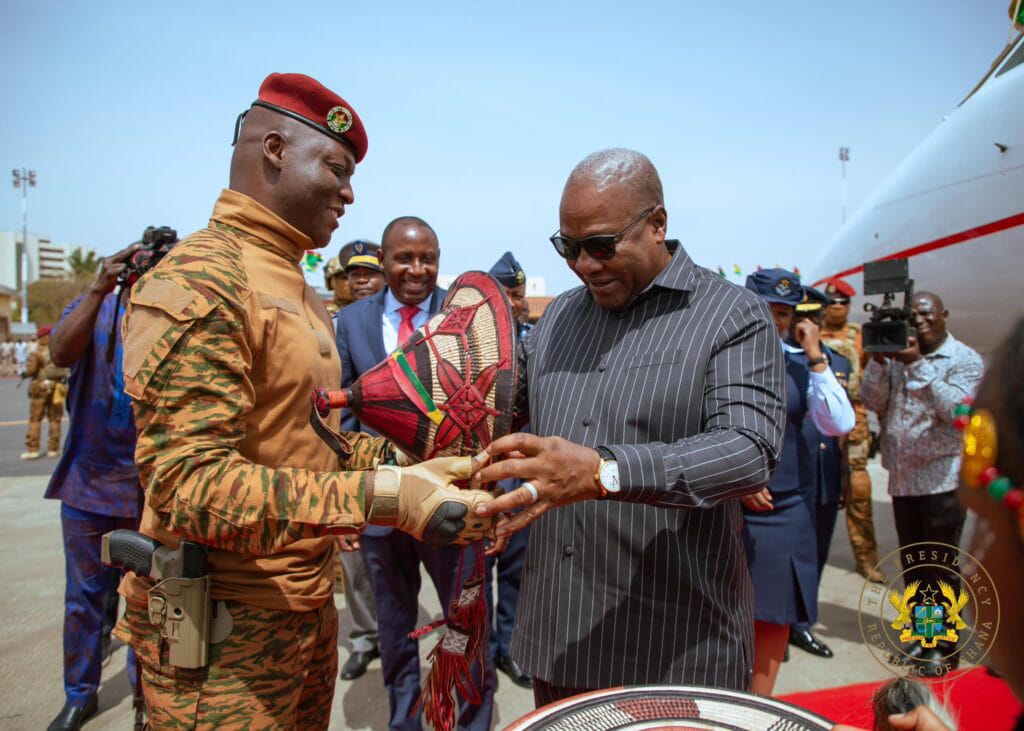
The agreements include:
1. Mutual recognition of national driving licences – to remove regulatory bottlenecks along the key Tema-Ouagadougou trade corridor.
2. Agreement on transport and road transit – to harmonise transport regulations that have slowed regional commerce.
3. Framework agreement on cross-border cooperation, with regular consultations between local border authorities.
4. Joint commission to reaffirm the shared boundary and strengthen territorial governance.
5. Cooperation on disaster prevention and humanitarian crisis management, addressing flooding and emergency responses.
6. Agreement to combat illicit cultivation, production and trafficking of narcotic drugs and psychotropic substances.
7. New security framework to counter terrorism and violent extremism along the frontier region.
These seven pacts were endorsed by ministers and officials from both capitals, following two days of substantive talks.
What the Partnership Seeks to Achieve
The overarching aims of these agreements are both practical and strategic:
1. Enhanced regional security
Both governments have committed to closer security cooperation to address violent extremism that threatens border communities and trade routes. This includes a joint security framework intended to neutralise insurgent threats and improve intelligence and defence coordination.
2. Stronger trade and economic integration
By improving transit regulations and mutual recognition of licences and documents, the agreements aim to boost intra-African trade, facilitate commerce between Accra and Ouagadougou, and reinforce Ghana’s role within the African Continental Free Trade Area (AfCFTA) framework.
3. Better border governance and mobility
Regular consultations between border authorities, affirmed boundaries and harmonised transit protocols are intended to promote predictable, secure and efficient movement of people and goods.
4. Joint disaster management
The pact on disaster preparedness and humanitarian response seeks to coordinate early warning systems and emergency action, especially important given the historic flooding linked to the Bagré Dam that has affected both sides of the border.
5. Public health, law enforcement and social stability
Cooperation to combat the illicit drug trade and related crimes forms part of a broader strategy to improve public safety, address cross-border criminal activity and protect youth and communities.
Long-term Ambitions
Leaders in both countries have emphasised that this is not a one-off diplomatic gesture but a foundation for sustained regional cooperation. By institutionalising these frameworks through the PJCC and implementing practical measures, the partnership is designed to:
foster lasting peace and stability in a security-sensitive region,
deepen economic ties within West Africa,
set an example for functional intra-African cooperation,
and support broader continental goals such as stronger integration under AfCFTA and resilience against humanitarian risks.
In summary, the Ghana–Burkina Faso collaboration of 2026 is rooted in shared security challenges and economic interdependence. Through a comprehensive set of agreements, both nations aim to create a safer, more connected and prosperous corridor that benefits not just their citizens but the wider West African region.
0 Comments
No comments yet. Be the first one to comment!