Ghana, U.S. Armed Forces Strengthen Medical Readiness Through SETAF-AF Best Medic Competition
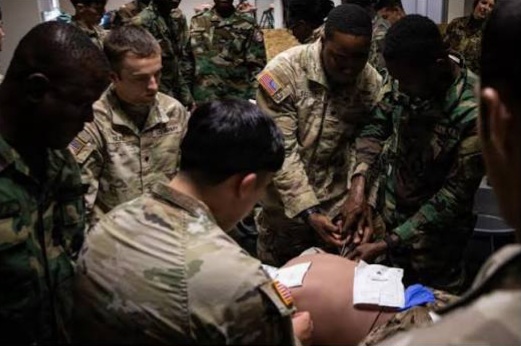
Medical personnel from the Ghana Armed Forces (GAF) have joined counterparts from the United States, Italy, and Liberia to reinforce combat medical readiness and interoperability at the U.S. Army Southern European Task Force, Africa (SETAF-AF) Best Medic Competition held in Vicenza, Italy, 5–15 January 2026. The event underscores ongoing security cooperation between Ghana and partner nations in preparing military medical professionals for complex operational environments.
The Best Medic Competition is a multiphase evaluation and training exercise designed to assess and advance the technical and physical proficiency of military medics under simulated operational stress. Participants are tested on a range of capabilities, from trauma care and prolonged casualty care to chemical, biological, radiological and nuclear (CBRN) preparedness and physical endurance.
For the second consecutive year, Ghana fielded a four-person joint team drawn from the army, navy and air force. This diverse representation highlights both the range of medical expertise within the GAF and Ghana’s broader commitment to defence cooperation with allied forces.
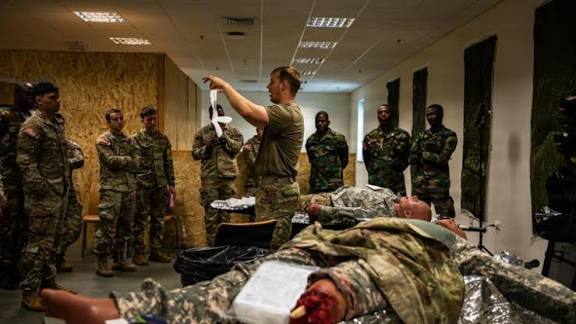
The Ghanaian team delivered notable performances in the competition. Among individual highlights:
Sgt. Cornelius Adagbe and Leading Seaman Ato Amonoo-Rockson achieved third place overall, scoring 2,789 out of 3,000 points.
Amonoo-Rockson recorded the second-highest U.S. Army Fitness Test score, while Adagbe placed second in the unknown distance foot march segment.
Across specific scenarios, Ghanaian medics worked alongside U.S. counterparts in delayed evacuation casualty management, tactical combat casualty care, and K-9 casualty support, demonstrating interoperability in simulated high-stress conditions.
The SETAF-AF competition serves a dual purpose: it tests individual capabilities and strengthens collective readiness among partnered militaries. According to U.S. Army Sgt. Maj. Shanett Robinson, chief medical noncommissioned officer of SETAF-AF, the event pushes participants to validate their skills in high-stress, interoperable environments, scenarios that mirror real-world crises requiring rapid, coordinated medical responses.
For Ghana, participation in multinational exercises reflects a broader security partnership with the United States and allied forces, building on initiatives such as strategic transport support and joint training missions. This cooperation not only enhances military medical capacity but also prepares personnel for potential humanitarian and crisis response operations.
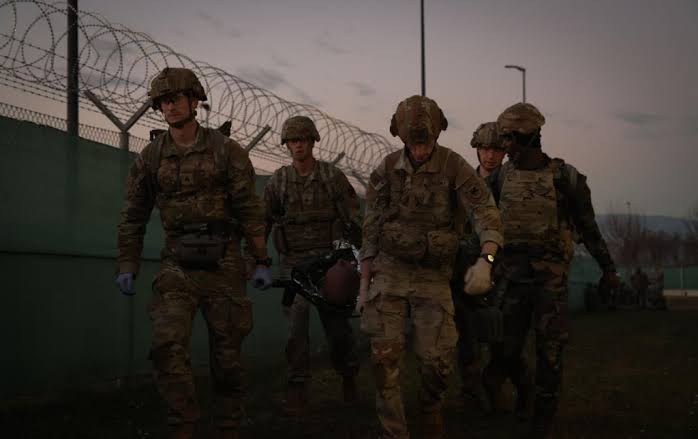
The Best Medic Competition is part of a spectrum of security cooperation activities under the auspices of SETAF-AF, which include crisis response preparation, interoperability exercises and professional exchanges with partner militaries across Africa and allied nations.
Past engagements have included medical and civil affairs training as well as larger multinational exercises that underscore the importance of coordinated readiness. These events aim to ensure that participating forces maintain high standards of medical support capabilities and are better equipped to respond to casualties in a variety of operational contexts.
Ghana’s strong showing in the Best Medic Competition signals both the professional calibre of its military medical personnel and the depth of its defence partnerships. As security challenges evolve, from traditional battlefield contexts to humanitarian crises, enhanced medical readiness and international interoperability are increasingly central to national and regional defence strategies.
Participation in events such as the SETAF-AF competition enables Ghana to benchmark its training standards, integrate best practices from peer militaries, and contribute to collective preparedness across allied frameworks.
Ghana’s engagement in the SETAF-AF Best Medic Competition reflects a strategic alignment in defence medical readiness with global partners, reinforcing both skill proficiency and cooperative capacity in support of future multinational operations.
0 Comments
No comments yet. Be the first one to comment!