Gov't Launches Free Primary Healthcare Programme
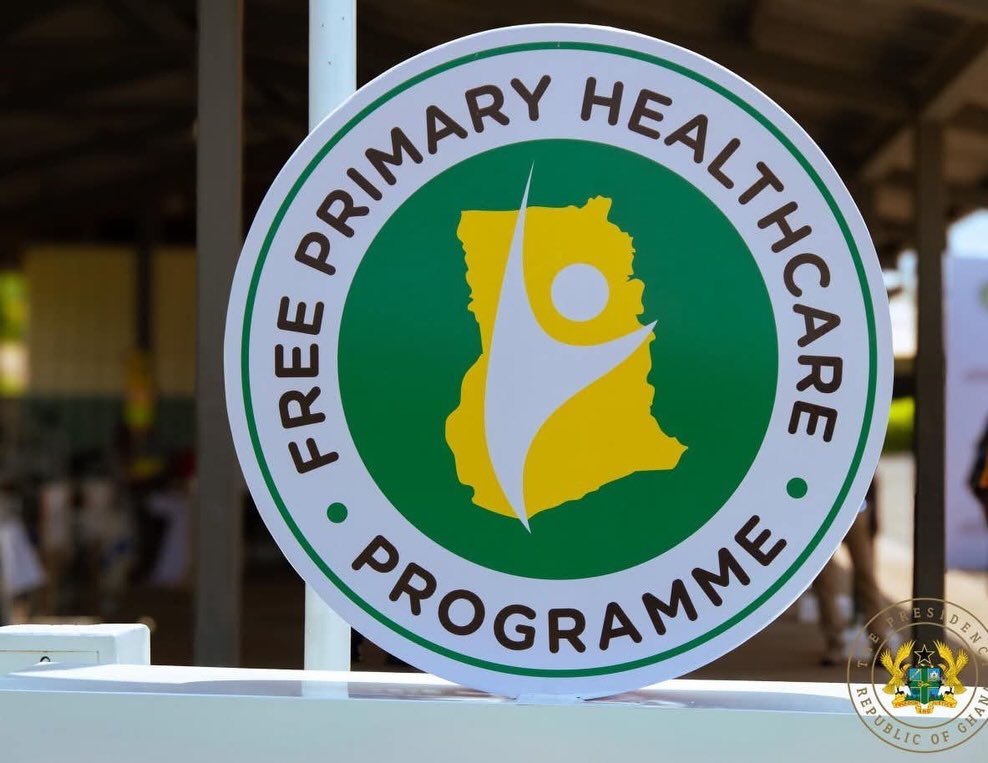
President John Dramani Mahama on Wednesday, April 15 2026 officially launched Ghana's Free Primary Healthcare (FPHC) Programme, pledging to extend essential medical services to every citizen regardless of insurance status while making clear the initiative will work alongside, and not supplant, the existing National Health Insurance Scheme.
The launch was held at the Shai Osudoku District Hospital in Dodowa, Greater Accra Region, marking what government officials described as a significant step toward strengthening Ghana's primary healthcare system and advancing universal health coverage.
According to the Chief Executive Officer of the National Health Insurance Authority, Dr. Victor Asare Bampoe, NHIS coverage rose from 57 percent to 66 percent in 2025, but that still leaves roughly 34 percent of Ghanaians without cover. He further noted that 30 percent of all healthcare expenditure in the country continues to be borne directly by patients out of pocket.
It is precisely this gap that the FPHC aims to bridge. Under the new policy, basic screening and treatment for common illnesses such as malaria and cholera will be handled at Community-based Health Planning and Services (CHPS) compounds at no cost to patients. Those requiring advanced care will be referred to district-level facilities, where NHIS cards remain necessary.
"At the polyclinic, health centre and CHPS compound levels, you do not need an NHIS card. You only need your Ghana Card or any form of identification to prove residency in the community," the President said.
President Mahama stressed that a key pillar of the programme is prevention, aimed at early detection and treatment of illnesses before they progress into more serious conditions. He said community health nurses and volunteers would play a critical role through household visits, community outreach, health education and basic screening services.
"At least every Ghanaian must be screened once a year, and that includes basic screening such as hypertension," he said, adding that FPHC posts would be equipped with blood pressure monitoring devices.
The programme is estimated to cost at least GH₵1.2 billion annually to sustain. The first phase will target 150 of Ghana's 261 districts, prioritising underserved communities. The 2026 national budget has allocated GH₵1.5 billion to support the rollout.
The Minister of Health, Kwabena Mintah Akandoh, said phase two would expand to the remaining districts in 2027, with full national coverage expected by 2028.
The government has also procured over 24,000 pieces of medical equipment, including X-ray machines, ultrasound machines, glucometers, baby incubators and hospital beds with distribution to health facilities already underway.
The President called upon traditional and faith-based leaders to play an active role in mobilising communities and encouraging widespread participation in routine health screenings. He also assured health professionals and volunteers that participation in the programme would be rewarded, promising that those who serve in the initiative would be given priority when government recruitment opportunities arise.
For patients with the most complex conditions, those requiring dialysis, for instance, will be referred to the Ghana Medical Trust Fund,also known as Mahamacare, for free treatment at accredited centres.
The FPHC Programme represents the most ambitious restructuring of Ghana's healthcare delivery system in years. Whether the funding holds and the infrastructure keeps pace with demand will determine if the promise made in Dodowa translates into real relief for the millions who have long fallen through the cracks.
0 Comments
No comments yet. Be the first one to comment!