How Palmer and Foden Lost Ruthless Tuchel’s Battle for England’s No.10 Role

When Thomas Tuchel took charge of the England national football team, one thing became immediately clear: reputation alone would not guarantee a place in his plans.
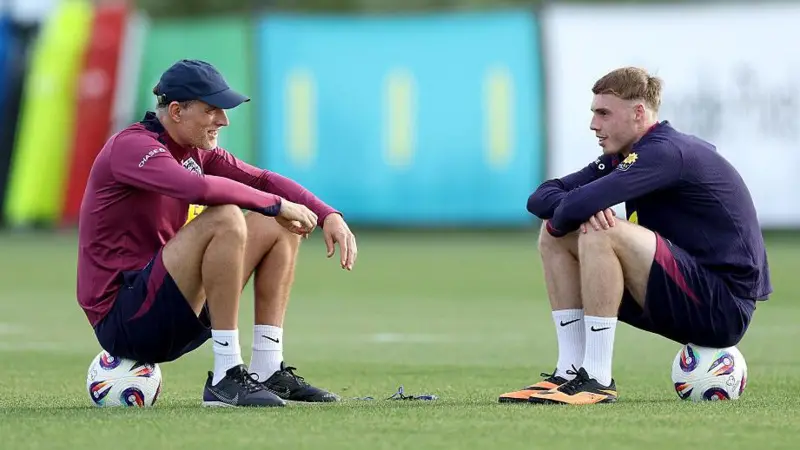
That reality has now hit two of England’s biggest attacking stars; Cole Palmer and Phil Foden, after both were omitted from Tuchel’s latest World Cup squad.
For years, many believed England’s creative midfield role belonged naturally to Foden, while Palmer’s rise at Chelsea positioned him as the next heir to the No.10 throne. But Tuchel’s latest selections suggest something different: talent is no longer enough. Output, tactical discipline, intensity, and consistency now define selection.
And in that ruthless assessment, players like Morgan Rogers and Eberechi Eze have overtaken them.
Tuchel’s Message: Form Over Fame
Tuchel has never been sentimental as a manager. Across spells at Chelsea F.C., Paris Saint-Germain F.C. and FC Bayern Munich, he built a reputation for demanding tactical commitment and rewarding players who execute roles precisely.
England’s squad announcement reinforced that identity. Big names were sacrificed, while players viewed as more balanced and effective within Tuchel’s system were rewarded.
Reports surrounding the omissions pointed toward inconsistency, reduced influence in matches, and concerns about recent performances from Palmer and Foden.
Foden, despite his undeniable technical quality, struggled to dominate games consistently during a difficult campaign at Manchester City F.C. Palmer, meanwhile, showed flashes of brilliance but failed to fully convince Tuchel that he could carry the tactical burden required in international tournament football.
Why Rogers and Eze Won the Battle
The rise of Rogers and Eze is not accidental.
Eze has evolved into one of England’s most dangerous progressive midfielders — direct, fearless, and capable of destabilizing compact defensive systems. His ability to carry the ball through midfield and operate between lines gives England a different dimension.
Rogers, on the other hand, offers something Tuchel clearly values: physicality mixed with creativity. The Aston Villa attacker has developed into a complete attacking midfielder capable of pressing aggressively, driving into spaces, and contributing defensively without sacrificing attacking quality.
In modern tournament football, managers increasingly prefer multifunctional attackers over pure technicians. Rogers and Eze fit that evolution perfectly.
Where Palmer and Foden often thrive in systems built around possession dominance, Rogers and Eze appear more adaptable to transitional football, something Tuchel has historically favoured in high-pressure matches.
The Ruthless Nature of International Football
International football is brutal because opportunities are limited. Club form, chemistry, tactical fit, and mentality all combine into a narrow selection window.
Tuchel’s decision feels symbolic. He is attempting to move England away from selecting players based purely on status or hype. Instead, he appears focused on players who can execute a very specific identity.
That identity likely revolves around:
Vertical attacking play
High pressing intensity
Transitional speed
Tactical flexibility
Physical competitiveness
In that framework, Rogers and Eze currently appear better aligned.
This Is Not the End for Palmer and Foden
Neither player is finished internationally.
Foden remains one of the most gifted footballers England has produced in recent years, while Palmer’s ceiling remains extraordinarily high.
But Tuchel’s message is clear: England’s No.10 role is now earned weekly, not inherited through reputation.
And right now, Rogers and Eze are winning that race on performances, intensity, and tactical suitability.
That may frustrate supporters of Palmer and Foden, but for England, it could finally signal the arrival of a merit-driven era, one where form outweighs fame.
0 Comments
No comments yet. Be the first one to comment!