Trade Flows Normalize: Burkina Faso Resumes Fresh Tomato Exports to Ghana
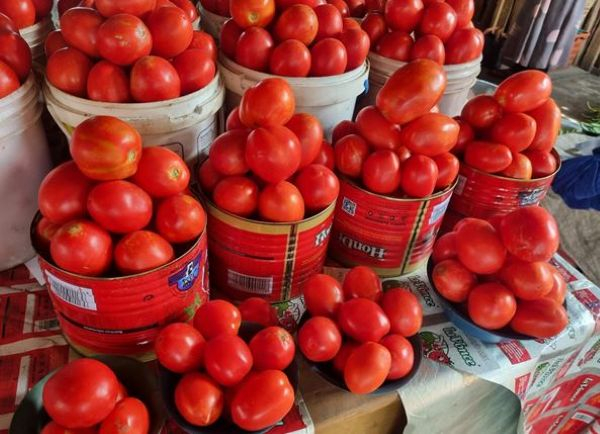
The government of Burkina Faso through Ministry of Industrial Development, Trade and Handicrafts has officially authorized the resumption of fresh tomato exports to Ghana, reversing an earlier suspension tied to domestic market stabilization measures.
Ghana's Ministry of Trade, Agribusiness and Industry confirmed the development following bilateral engagements with Burkinabè authorities.
Trade Minister Elizabeth Ofosu-Adjare welcomed the development, describing it as a timely intervention to ease supply-side constraints in the domestic tomato market. The decision ends a months-long disruption that had constrained cross-border agricultural trade and contributed to supply pressures in Ghanaian markets.
According to officials familiar with the discussions, the breakthrough followed high-level engagements between Ghanaian and Burkinabè delegations on the sidelines of international trade meetings, including sessions linked to the World Trade Organization.
Elizabeth Ofosu-Adjare indicated that Ghana had formally raised concerns over the export restrictions and their downstream impact on food supply and price stability, prompting a review by Burkina Faso’s trade authorities.
Market Impact and Supply Dynamics
Burkina Faso remains a critical external supplier in Ghana’s tomato value chain, particularly during seasonal production gaps when domestic output declines. The resumption of exports is expected to increase the volume of tomatoes entering key consumption centers such as Accra and Kumasi.
The Ministry has consistently emphasized that imports, especially from Burkina Faso, play a gap-filling role, rather than a substitute for long-term domestic production strategy.
Market data from commodity traders and agricultural aggregators over recent months indicate significant price volatility in Ghana, with periodic spikes driven by reduced local harvests, post-harvest losses, and high transportation costs. Analysts suggest that increased inflows from Burkina Faso could moderate wholesale prices, although the extent of price transmission to retail markets remains uncertain.
Crucially, the relationship between import volumes and consumer prices is mediated by several factors, including fuel costs, exchange rate pressures, and intermediary markups. As a result, while supply is likely to improve in the short term, immediate and uniform price reductions are not guaranteed.
Cross-Border Trade Relations
The resumption aligns with broader commitments under the ECOWAS, which promotes the free movement of goods across member states. Both Burkina Faso and Ghana have reiterated the importance of maintaining open trade corridors for essential food commodities.
However, trade experts within ECOWAS institutions have previously acknowledged that non-tariff barriers, including transit levies and border delays, continue to affect the efficiency of intra-regional food trade.
Agricultural analysts suggest that while the renewed imports will provide short-term relief, Ghana must continue investing in its domestic tomato production value chain, particularly irrigation, storage, and processing to reduce long-term dependence on imports.
For now, however, the reopening of Burkina Faso’s tomato exports is expected to bring immediate relief to consumers and traders alike, reinforcing the importance of regional collaboration in addressing food supply challenges.
0 Comments
No comments yet. Be the first one to comment!