Transatlantic Slave Trade: Ghana Leads Africa To Reparation And Justice
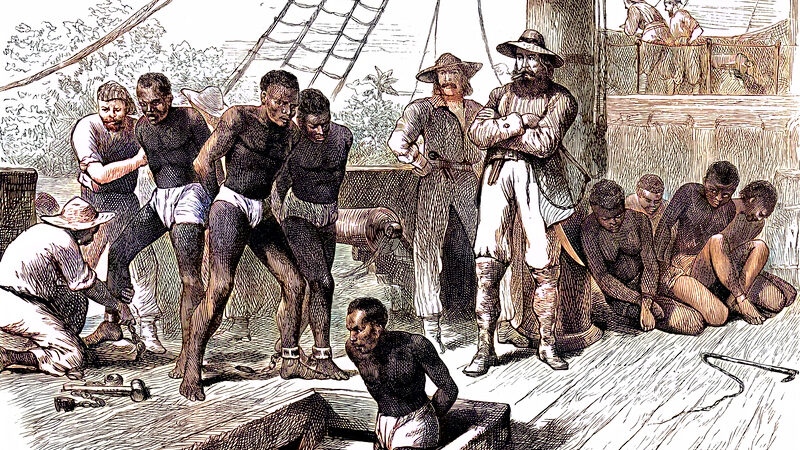
On the International Day of Remembrance for the Victims of the Transatlantic Slave Trade, Ghana stepped into the chamber of the United Nations General Assembly today carrying more than a draft resolution. It carried four centuries of unresolved history. President John Dramani Mahama, acting in his capacity as the African Union's Champion for Advancing the Cause of Justice and Payment of Reparations, tabled a landmark resolution calling on the international community to formally declare the trafficking and enslavement of Africans the gravest crime against humanity, and to begin concrete dialogue on reparatory justice.
The move is the most significant multilateral push for slavery reparations in modern history. It is backed by the African Union's 55 member states, supported by the AU-CARICOM alliance that has been building momentum across the Global South, and grounded in a legal and moral architecture that its architects say is no longer deniable. Yet even among those who agree that justice is overdue, a sharper and more uncomfortable debate about not whether reparations are deserved, but whether Africa has prepared the institutional conditions under which they could actually deliver justice, is gaining traction.
GHANA TAKES THE CASE TO THE WORLD
The resolution, titled the Declaration of the Trafficking of Enslaved Africans and Racialised Chattel Enslavement of Africans as the Gravest Crime Against Humanity, was formally notified to the UN General Assembly in September 2025. Ghana's Foreign Minister, Samuel Okudzeto Ablakwa, has described it as a pivot from ceremony to consequence; from annual commemorations that produce little accountability to a legally grounded demand that the international community own its complicity.
The scale of what it seeks to recognise is staggering. According to Ghana's Foreign Ministry, more than 12.5 million Africans were forcibly removed from the continent and trafficked across the Atlantic under conditions of extraordinary violence. The effects, advocates argue, are not simply historical. They are structural, economic, and still unfolding , embedded in the inequalities that shape global development today.
"Ghana is a crime scene because we host the highest number of forts and castles where millions of Africans were taken through the door of no return," Minister Ablakwa said. It is from that specificity of geography and grief that Ghana draws its mandate. The African Union, which designated 2025 as the Year of Reparations and African Heritage and declared 2026 to 2035 the Decade of Action on Reparations, has asked President Mahama to champion the cause on behalf of the entire continent.
The resolution does not demand a single cheque payable to African governments. Ablakwa has been explicit on this point. "The reparations we seek is not financial support to go to political leaders. Not at all. We are putting together a framework that will support the people, the real victims." The resolution calls for formal apologies, restitution, compensation routed to affected communities, rehabilitation programmes, and guarantees of non-repetition. It also demands the return of stolen artefacts -millions of objects described as vital to the identity, heritage and spiritual life of the continent.
The motion has gone through seven rounds of informal consultations at the UN. It has attracted broad support from the Global South, though significant resistance persists from several European nations, with France, Belgium, Portugal, Spain, the Netherlands, and the United Kingdom among the states that have historically opposed even discussing the subject at the multilateral level.
THE CASE FOR REPARATIONS: A DEBT LONG OVERDUE
Proponents of reparations argue that the moral and legal foundations for redress have never been stronger, and that the world's failure to act has itself been a choice, not an inevitability.
The 1993 Abuja Proclamation of the Organisation of African Unity formally declared slavery and the slave trade unprecedented crimes against humanity. In February 2025, the AU went further: at its 38th Ordinary Session, all 55 member states adopted a decision qualifying slavery, deportation, and colonisation as crimes against humanity and genocide against the peoples of Africa. The resolution before the General Assembly today rests on that foundation.
The moral argument draws explicit force from historical precedents in which reparations were paid and, in the case of Germany and Israel, transformed the political relationship between former perpetrators and victims. In 1952, West Germany's Chancellor Konrad Adenauer, facing fierce domestic opposition, signed the Luxembourg Agreement, committing West Germany to paying three billion deutschmarks to Israel between 1953 and 1967, with an additional payment to the World Jewish Congress. By 1956, German transfers were supplying an estimated 87.5 percent of Israel's state revenue, funding the infrastructure, industry, and agricultural systems of a newly established state. Scholars have since described this programme as the largest reparations effort ever implemented, with total German payments exceeding 80.5 billion euros and continuing well into the 21st century.
For advocates, the clear lesson of that precedent is when the political will exists and the institutional framework is sound, reparations can be transformative. Israel used the capital to build railways, irrigation systems, and industrial capacity, converting moral acknowledgement into material development. If Africa were to receive reparations routed through well-governed institutions, the argument goes, the continent could do the same.
Supporters also note that the resolution is deliberately forward-looking. September 2026 will mark the centenary of the League of Nations Convention to Suppress the Slave Trade and Slavery, a hundred years since the international community first bound itself in treaty form to ending the trade. That a century later there has been no formal reparatory justice, advocates argue, is not an accident. It is a political choice that must now be reversed.
THE COUNTERARGUMENT: WHAT AFRICA DOES WITH WHAT IT RECEIVES
Not everyone who believes reparations are morally justified believes the current push is strategically sound. A second school of thought present not only among sceptics in the West but among African economists, development scholars, and civil society voices on the continent itself raises a question, that even if reparations are secured, are the political conditions in place to ensure the resources reach ordinary people rather than disappearing into the machinery of elite accumulation?
The comparison most often invoked is not Germany-Israel, but South Africa. When apartheid ended and the Truth and Reconciliation Commission was established in 1995, one of its committees, the Committee on Reparations and Rehabilitation, produced what scholars have described as among the world's most ambitious and comprehensive reparations policy recommendations. The South African government did not implement them. It delayed for years, argued the work of other TRC committees was incomplete, and ultimately delivered reparations that were far below what had been recommended, distributed unevenly, and widely considered to have failed the survivors they were meant to serve. Racial wealth inequality in South Africa remains among the starkest in the world.
Critics of the current demand do not dispute the injustice. Their argument point to persistent governance deficits across much of the African Union's membership, states where resource revenues have historically been captured by political elites rather than redistributed to the populations they came from. They ask what guarantees exist that reparations paid to governments, or even to continental bodies, will reach the descendants of enslaved Africans who live in poverty today.
Ghana's government framework acknowledges this concern, at least rhetorically. Ablakwa has insisted the proposed framework would support communities directly, not governments. But critics note that the architecture for doing so, including the oversight mechanisms, the disbursement channels, the accountability structures, has not yet been publicly detailed. A resolution is not a programme. Declaring that reparations will not go to political leaders is not the same as designing an institutional system that prevents it.
There is also the question of who controls the narrative of need. Africa is not a single country. The descendants of enslaved Africans are spread across the diaspora - in the Americas and the Caribbean - and within the continent itself. Who defines the eligible recipients? Who determines what constitutes redress? Who adjudicates competing claims? These questions, familiar from reparations debates in the United States and the Caribbean, become enormously more complex at the global scale now being proposed.
THE SYMBOLISM AND WHAT LIES BEYOND IT
It would be a mistake to reduce Ghana's initiative to the question of whether a cheque will eventually be written. Even if the resolution passes and no financial transfer ever follows, the political symbolism of a UN General Assembly formally declaring the transatlantic slave trade a crime against humanity would be significant. It would create a legal and moral reference point, a statement of the international community's collective conscience that advocates could invoke for generations.
Minister Ablakwa delibrately captured this duality when he described the resolution as belonging "to the conscience of the international order." Ghana is not positioning this as a demand for charity or development aid. It is positioning it as a matter of legal accountability. It is one that carries the same moral weight as the world's response to the Holocaust.
The European resistance tells its own story. The countries that have most consistently blocked even a discussion of reparations are, in the main, the ones whose wealth was most directly built on the trade. Their resistance is not merely diplomatic squeamishness. It is an implicit acknowledgement that the legal and moral argument, once entertained seriously, leads somewhere uncomfortable for them.
"Ghana is not seeking to reopen old wounds but to heal those wounds with truth."
- Minister of Foreign Affairs, Samuel Okudzeto Ablakwa
What Ghana has done, arguably, is shift the burden of proof. For decades, the question posed to Africa was: why should anyone pay reparations? Ghana's resolution, backed by the African Union and a growing CARICOM coalition, reframes the question: why, after centuries of documented atrocity and a century since the first international treaty against the slave trade, has no accountability been attempted?
A MOMENT OF TESTING
Today's debate at the UN General Assembly will not resolve the reparations question. It is unlikely that any single vote will. What it represents is the transformation of a moral argument into a multilateral diplomatic process, one that now has institutional momentum, continental backing, and a defined legal framework behind it. That is itself a form of progress, regardless of today's outcome.
But the dual challenge that Ghana and its African partners must meet is as much internal as it is external. Securing a UN resolution is the beginning of a process, not its conclusion. The harder work of designing transparent, accountable mechanisms for any resources that might flow; of building the political consensus within Africa about who the beneficiaries are and how decisions are made; of resisting the temptation to allow reparations to become another instrument of elite consolidation is work that no UN resolution can do.
Germany paid. Israel built. South Africa's TRC recommended. South Africa's government delayed, diluted, and ultimately failed its survivors. The lesson that both camps in this debate are, perhaps, pointing toward is the same one: the moral claim is settled. The institutional question of who controls it, how it is governed, what it is used for is the ground on which reparatory justice will either be realised or lost.
On the steps of what Ghana calls a crime scene (the slave forts and castles along its coastline, where millions passed through doors from which they never returned), the question of accountability has waited four hundred years. Whether the answer that follows, if one comes, proves adequate to that wait depends not only on what the world decides, but on what Africa demands of itself.
0 Comments
No comments yet. Be the first one to comment!