US Orders Embassy Staff Out of Nigeria as 23 States Placed on 'Do Not Travel' List
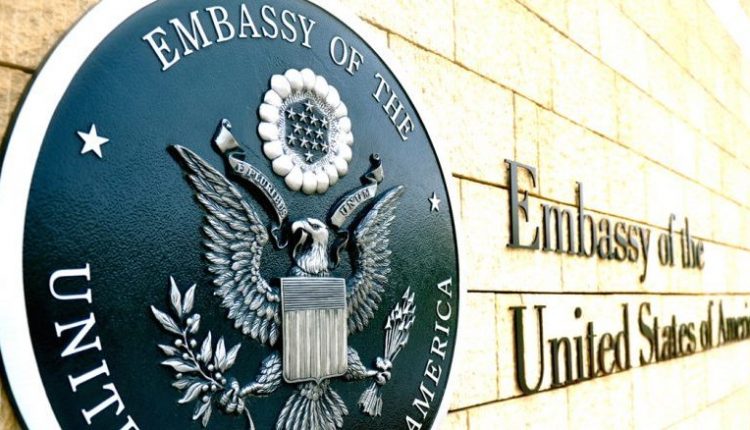
The United States Department of State authorised the departure of non-emergency government employees and their family members from the U.S. Embassy in Abuja on Wednesday, citing a deteriorating security situation across Nigeria. The move accompanied an updated travel advisory, effective April 8, 2026, in which Washington urged American citizens to reconsider travel to Nigeria due to crime, terrorism, kidnapping, civil unrest, and inconsistent access to healthcare services.
The overall advisory remains at Level 3 , Reconsider Travel, with no change to the risk indicators themselves. However, the update significantly expanded the list of states under Level 4: Do Not Travel, adding Plateau, Jigawa, Kwara, Niger, and Taraba to a roster that now covers 23 of Nigeria's 36 states. The advisory summary was also revised to reflect the authorised departure of embassy personnel.
The U.S. Embassy in Abuja said in a public notice: "On April 8, 2026, the Department of State authorised non-emergency U.S. government employees and U.S. government employee family members to leave U.S. Embassy Abuja due to the deteriorating security situation." The Embassy has not disclosed when the affected staff will depart, or whether the directive extends to Nigerian nationals employed at the mission.
States Under 'Do Not Travel'
The 23 states now subject to the highest-level travel warning fall into three geographic clusters, each with distinct threat profiles.
In the north and northeast, Borno, Jigawa, Kogi, Kwara, Niger, Plateau, Taraba, Yobe, and northern Adamawa states are designated due to terrorism, crime, and kidnapping. The Boko Haram insurgency and its offshoot, Islamic State West Africa Province (ISWAP), continue to mount attacks on civilians, military convoys, and aid workers in this region, particularly in Borno. The militant group Ansaru is also cited as active.
In the northwest, Bauchi, Gombe, Kaduna, Kano, Katsina, Sokoto, and Zamfara states are listed due to unrest, crime, and kidnapping. In Plateau and Benue states, weeks of violence linked to armed banditry, communal clashes, and reprisal attacks have left dozens of people dead in recent weeks, directly contributing to the expansion of the restricted list.
In the south, Abia, Anambra, Bayelsa, Delta, Enugu, Imo, and Rivers states, with the exception of Port Harcourt are restricted due to crime, kidnapping, and civil unrest. The advisory notes that armed gangs are active across the Niger Delta and Southeast, with crimes including kidnapping and assaults on Nigerian security services. Violence between farming and herding communities in rural areas is also cited.
"The security situation in these states is unstable and uncertain. Do not travel to these areas for any reason." — U.S. State Department Advisory, April 8, 2026
Crime and Kidnapping
Across Nigeria broadly, the advisory warns that violent crime is common. This includes armed robbery, assault, carjacking, kidnapping, hostage-taking, roadside banditry, and rape. The department notes that Americans are often perceived as wealthy targets, and that attacks can occur with little or no warning in public spaces including markets, hotels, places of worship, schools, and transport hubs.
Kidnapping for ransom remains a significant threat. The advisory specifically cautions that U.S. government personnel face restrictions that limit the consular assistance available to American citizens in many parts of the country.
Healthcare Limitations
The advisory flags healthcare access as a compounding risk. Nigerian medical facilities are generally not equipped to U.S. or European standards, and many common medications including those for diabetes and asthma are often unavailable. Hospitals typically require immediate cash payment; most do not accept U.S. health insurance. Ambulance services are described as unreliable, poorly equipped, and frequently without trained paramedics. The State Department advises travellers to obtain medical evacuation insurance before any visit and notes that it does not pay medical bills incurred overseas.
A Paradox in US-Nigeria Relations
The advisory arrives against the backdrop of an active and expanding security partnership between Washington and Abuja. In early 2026, Nigeria's Defence Ministry confirmed that approximately 100 U.S. troops had been deployed to the country to assist with military training and counterterrorism operations. Cooperation between the two governments has included surveillance and reconnaissance support, as well as the deployment of U.S.-supplied aircraft and helicopters by Nigerian forces against Islamist insurgents and armed groups.
The decision to scale back embassy staffing while deepening military engagement reflects the divergence between strategic interests and civilian security conditions; a gap that observers have noted is widening across multiple theatres in West Africa.
Nigeria's Response
Nigerian authorities had not issued a formal response to the advisory as of the time of this report. In previous instances of elevated U.S. travel warnings, Nigerian officials have argued that such designations fail to capture security improvements in particular regions and carry the risk of unfairly damaging the country's international standing and investment climate.
The State Department said it regularly reviews and updates advisories for countries at Levels 3 and 4, and may adjust guidance as conditions evolve or embassy operations change. American citizens in Nigeria are encouraged to enrol in the Smart Traveller Enrollment Programme (STEP) to receive real-time security alerts.
0 Comments
No comments yet. Be the first one to comment!